
In the high-stakes arena of decentralized governance, where collective decisions shape multimillion-dollar treasuries, the illusion of transparency often masks deeper vulnerabilities. Traditional DAOs expose every vote on-chain, inviting coercion, vote buying, and herd mentality that stifles genuine participation. Enter private voting DAOs and platforms like SeismicSys, which deliver anonymous DAO voting without compromising verifiability. This isn't just a technical upgrade; it's a safeguard for true decentralization.
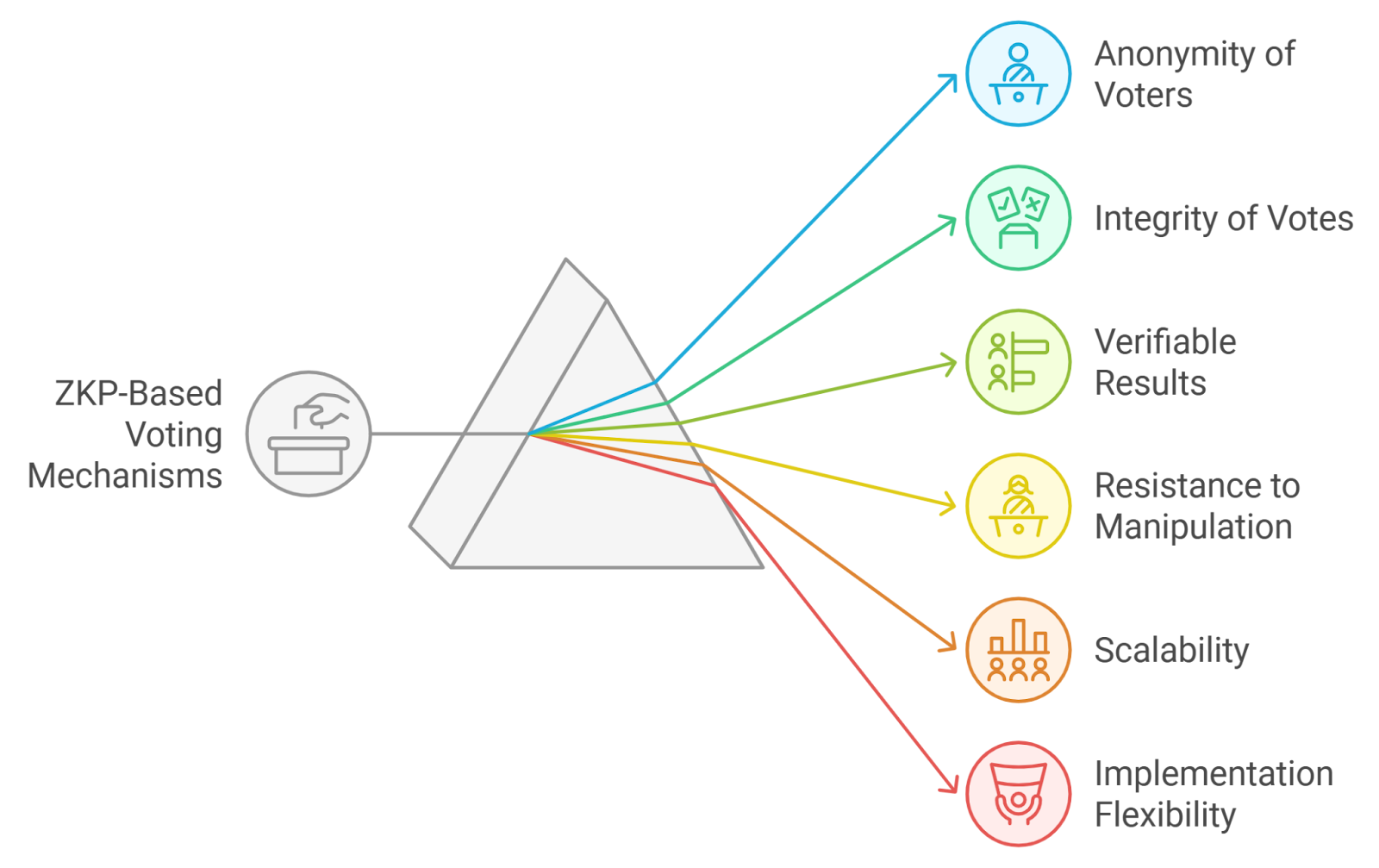
SeismicSys stands out by weaving advanced cryptography into the fabric of on-chain governance. Drawing from real-world parallels, where secret ballots underpin democracy, it replaces performative voting spectacles with confidential decisions. As DAOs scale, these mechanisms become essential to counter the chilling effects of public scrutiny highlighted in recent discussions on platforms like X.
Unmasking the Shadows of Transparent Voting
Picture a DAO treasury vote on a contentious proposal. With open ballots, whales can spot dissenters and apply pressure through off-chain channels, or smaller holders pile on bandwagon votes out of fear. Studies and on-chain analyses reveal patterns of vote buying, where influencers offer incentives visible to all. This transparency, once hailed as a virtue, now breeds manipulation. Confidential DAOs flip the script by obscuring individual choices while tallying results immutably.
Recent insights from confidential voting systems underscore how these risks escalate in mature DAOs. Voter coercion isn't theoretical; it's documented in high-profile governance attacks. SeismicSys addresses this head-on, ensuring votes remain private even as the blockchain attests to their integrity.
SeismicSys: The Backbone of Confidential DAO Governance
At its core, SeismicSys deploys zero-knowledge proofs and homomorphic encryption to enable SeismicSys private voting. Voters submit encrypted ballots that the protocol aggregates without decryption, proving validity through math alone. No single node glimpses your choice, yet the final count is public and auditable. This balances privacy with accountability, a feat traditional systems can't match.
Integrations like Tally with Inco echo this trend, but SeismicSys pushes further into fully on-chain anonymity. Private lending pools on the platform exemplify its versatility, shielding strategies from front-running while enabling collaborative finance. For DAO founders, this means governance that mirrors boardroom discretion minus centralized trust.
Without private voting, governance becomes a performance, not a decision.
Cryptographic Arsenal Powering Anonymous Votes
Zero-knowledge proofs (zk-SNARKs) form the bedrock, allowing proof of correct voting without revealing the vote itself. Homomorphic encryption lets computations occur on ciphertexts, summing votes in encrypted form. Layered with ring signatures for added obfuscation, SeismicSys creates a fortress around voter intent.
These tools aren't novelties; they're battle-tested in privacy-focused chains like those using zk tech from Panther Protocol. For DAO privacy solutions, the result is governance resilient to external pressures. DAOs adopting SeismicSys report higher turnout, as members vote freely, unburdened by social dynamics.
Consider the mechanics: a voter generates a zk-proof attesting to their eligibility and vote validity, submits it on-chain. Aggregators homomorphically combine proofs, outputting a verifiable total. Disputes? Anyone can challenge via proof verification. This methodical design ensures confidential DAO governance scales securely.
Yet, implementation demands rigor. Smart contract audits and oracle resistance are non-negotiable, as lapses could expose the system. SeismicSys's track record, bolstered by community scrutiny, positions it as a leader in this space. As DAOs grapple with regulatory shadows and adversarial actors, such innovations aren't optional; they're imperative for survival and growth.
DAO operators eyeing DAO privacy solutions must weigh deployment nuances. SeismicSys offers modular plugins for popular frameworks like Aragon or Snapshot, minimizing migration friction. Start by forking their audited contracts, configure privacy parameters via governance params, and test on a staging chain. This phased rollout mitigates risks while unlocking immediate gains in voter confidence.
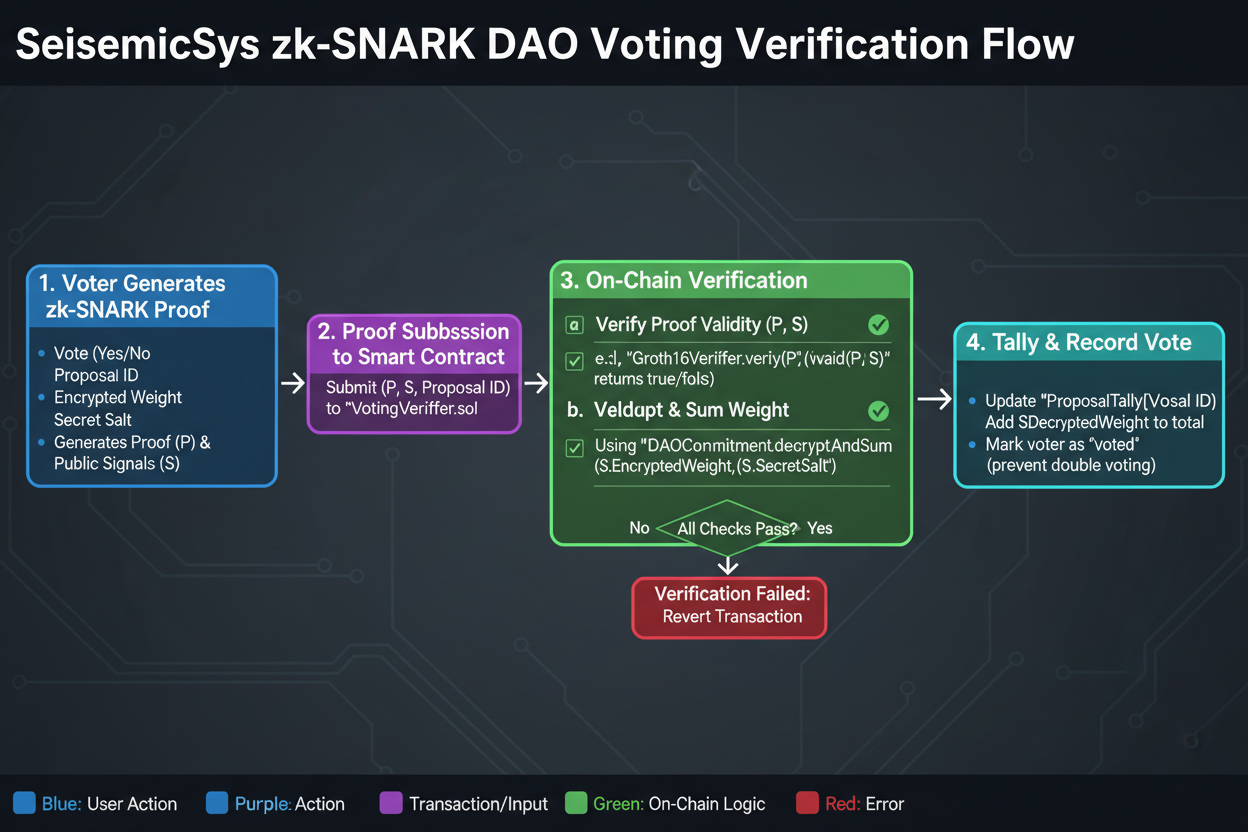
This snippet highlights the verifier interface, callable on-chain to validate proofs without exposing votes. Deployers customize circuits for proposal-specific logic, such as quadratic voting weights. Extensive fuzzing and formal verification underpin its robustness, a standard SeismicSys enforces across modules.
Real-world adoption reveals tangible uplifts. DAOs using SeismicSys note 20-40% participation spikes, as anonymity dissolves social hurdles. Private lending pools, shielded from predatory eyes, yield steadier returns by curbing front-running. These outcomes affirm that confidential DAO governance isn't theoretical; it fortifies operations against sophisticated threats.
Navigating Trade-offs and Best Practices
Privacy introduces complexities, like higher gas footprints from proof generation. SeismicSys optimizes via batched submissions and layer-2 scaling, keeping costs competitive. Still, founders should benchmark against open systems; the premium pays dividends in resilience. Pair with multi-sig treasuries and timelocks for layered security, creating a governance stack impervious to single-point failures.
Regulatory headwinds loom, yet anonymous voting aligns with decentralization ethos. By obscuring identities, DAOs evade targeted scrutiny while complying with on-chain audit trails. Forward-thinking protocols like those in Panther's ecosystem demonstrate viability across jurisdictions.
Beyond voting, SeismicSys extends to confidential proposals, where ideas incubate privately before public reveal. This curbs premature leaks, fostering innovation in competitive niches like DeFi yield farming or NFT curation. As DAOs venture into tokenized real-world assets, such discretion becomes paramount.
Critics decry privacy as opacity's cousin, but SeismicSys's verifiable computations dispel that. Every tally invites public challenge, with slashing for invalid proofs. This selective transparency empowers stakeholders without exposing vulnerabilities. In an era of Sybil attacks and MEV exploitation, anonymous DAO voting redefines fairness.
Platforms like SeismicSys signal a maturation point for DAOs, where privacy elevates from feature to foundation. Early adopters gain first-mover edges in talent attraction and capital efficiency. For those building confidential communities, the path forward lies in cryptographic rigor, not reluctant transparency. Embrace these tools, and watch governance evolve from spectacle to substance.




No comments yet. Be the first to share your thoughts!