

In the shadowed corridors of confidential DAOs, where decisions shape millions in tokenized assets, Sybil attacks loom as the silent saboteurs. One voter, many wallets: this asymmetry undermines sybil resistant confidential DAOs, turning democratic ideals into illusions. Enter private proof of humanity (PoH), a cryptographic bulwark that verifies unique personhood without unmasking identities. As a strategist who’s hedged DAO treasuries through volatile cycles, I argue this isn’t optional; it’s the disciplined path to secure private DAO voting.

The Imperative of Privacy-Preserving Personhood Verification
Traditional voting in public DAOs relies on token-weighted plutocracy, but confidential setups demand more: anonymous DAO voting that resists exploitation. Sybil resistance here means proving ‘one human, one vote’ via zero-knowledge proofs (ZKPs), where verifiers confirm uniqueness without seeing biometrics or social traces. Protocols like Humanity Protocol lead this charge, using palm scans transformed into ZK attestations. No data leaks, just mathematical certainty.
Consider the stakes. A single actor spinning up 100 pseudonymous wallets can sway proposals on treasury allocation or protocol upgrades. In my experience advising permissioned chains, unchecked Sybils erode trust faster than market drawdowns. Private PoH flips the script, anchoring votes to irrefutable human liveness while shrouding details in ZK fog.
“AI becomes the government” is dystopian: it leads to slop when AI is weak, and is doom-maximizing once AI becomes strong. But AI used well can be empowering, and push the frontier of democratic / decentralized modes of governance.
The core problem with democratic / decentralized modes of governance (including DAOs on ethereum) is limits to human attention: there are many thousands of decisions to make, involving many domains of expertise, and most people don’t have the time or skill to be experts in even one, let alone all of them. The usual solution, delegation, is disempowering: it leads to a small group of delegates controlling decision-making while their supporters, after they hit the “delegate” button, have no influence at all. So what can we do? We use personal LLMs to solve the attention problem! Here are a few ideas:
## Personal governance agents
If a governance mechanism depends on you to make a large number of decisions, a personal agent can perform all the necessary votes for you, based on preferences that it infers from your personal writing, conversation history, direct statements, etc.
If the agent is (i) unsure how you would vote on an issue, and (ii) convinced the issue is important, then it should ask you directly, and give you all relevant context.
## Public conversation agents
Making good decisions often cannot come from a linear process of taking people’s views that are based only on their own information, and averaging them (even quadratically). There is a need for processes that aggregate many people’s information, and then give each person (or their LLM) a chance to respond *based on that*.
This includes:
* Inferring and summarizing your own views and converting them into a format that can be shared publicly (and does not expose your private info)
* Summarizing commonalities between people’s inputs (expressed as words), similar to the various LLM+pol.is ideas
## Suggestion markets
If a governance mechanism values “high-quality inputs” of any type (this could be proposals, or it could even be arguments), then you can have a prediction market, where anyone can submit an input, AIs can bet on a token representing that input, and if the mechanism “accepts” the input (either accepting the proposal, or accepting it as a “unit” of conversation that it then passes along to its participant), it pays out $X to the holders of the token.
Note that this is basically the same as https://firefly.social/post/x/2017956762347835488
## Decentralized governance with private information
One of the biggest weaknesses of highly decentralized / democratic governance is that it does not work well when important decisions need to be made with secret information.
Common situations:
(i) the org engaging in adversarial conflicts or negotiations
(ii) internal dispute resolution
(iii) compensation / funding decisions.
Typically, orgs solve this by appointing individuals who have great power to take on those tasks.
But with multi-party computation (currently I’ve seen this done with TEEs; I would love to see at least the two-party case solved with garbled circuits https://vitalik.eth.limo/general/2020/03/21/garbled.html so we can get pure-cryptographic security guarantees for it), we could actually take many people’s inputs into account to deal with these situations, without compromising privacy. Basically: you submit your personal LLM into a black box, the LLM sees private info, it makes a judgement based on that, and it outputs only that judgement. You don’t see the private info, and no one else sees the contents of your personal LLM.
## The importance of privacy
All of these approaches involve each participant making use of much more information about themselves, and potentially submitting much larger-sized inputs. Hence, it becomes all the more important to protect privacy. There are two kinds of privacy that matter:
* Anonymity of the participant: this can be accomplished with ZK. In general, I think all governance tools should come with ZK built in
* Privacy of the contents: this has two parts. First, the personal LLM should do what it can to avoid divulging private info about you that it does not need to divulge. Second, when you have computation that combines multiple LLMs or multiple people’s info, you need multi-party techniques to compute it privately. Both are important.
Dissecting Key Protocols for Sybil-Proof Governance
Humanity Protocol stands out for its zkProofer Nodes, which generate ZKPs tying physical uniqueness to blockchain claims. Backed by Animoca Brands on zkSync, it integrates seamlessly, enabling DAOs to gatekeep participation. Users submit biometrics once; nodes attest without custody. This bridges Web2 inertia with Web3 autonomy, a rare feat in identity silos.
Key Private PoH Protocols
-

Humanity Protocol: ZK biometric verification confirms human uniqueness without exposing data, enabling Sybil-resistant DAO voting. Details
-
Orange zkTLS: Multi-Web2 proofs from X, Discord, Farcaster attest unique identity without revealing handles, preventing Sybil attacks. Details
-
Proof of Commitment (PoCmt): Time-bound human effort via identity-bound challenges mitigates Sybil attacks through proportional commitment. Details
Orange Protocol’s zkTLS takes a social angle, aggregating proofs from X, Discord, and Farcaster. No usernames exposed; just a bundled attestation of cross-platform uniqueness. DAOs require these for eligibility, slashing multi-account ploys. I’ve seen similar multi-source verification stabilize forex signals; here, it fortifies ZK proofs DAO governance.
Proof of Commitment (PoCmt) innovates further, demanding real-time human effort via identity-bound challenges. Maintaining Sybil clones demands exponential toil, pricing out attackers. Kite Protocol complements with private delegation: vote power flows anonymously, revocable at will. LinkDID aggregates decentralized IDs, proving singularity across ecosystems.
ZKPs: The Engine of Confidential Verification
At the core lies ZK tech, where proofs like zk-SNARKs bundle complex checks into succinct verifiability. For private proof of humanity DAO systems, circuits encode: ‘Prove you hold a valid biometric nonce, distinct from all priors, without revealing it. ‘ Circuits run client-side; chains verify in constant gas.
This elegance scales. Kleros’ Proof of Humanity evolves with video-social hybrids, now ZK-enhanced for privacy. Human Passport toolkit, adopted by 120 and projects, layers Sybil detection atop grants defense. Privado ID on Polygon DAOs promises anonymous, resistant voting via similar primitives. Yet, discipline dictates hybrid vigilance: no single vector owns truth.
Hybrid approaches layer these protocols, creating robust defenses. For instance, combine Orange zkTLS social proofs with Humanity’s biometric anchors for multi-vector confirmation. This mirrors my forex hedging: diversify signals to filter noise. DAOs adopting such stacks report 90% Sybil reduction in simulations, per arXiv governance papers.
Implementation Roadmap for Confidential DAOs
Integrating private proof of humanity DAO systems demands structured rollout. Begin with oracle nodes attesting off-chain data via ZK. Smart contracts then verify proofs on-chain, gating voting modules. Tools like Privado ID on Polygon simplify this, launching sybil-resistant governance with minimal code changes. I’ve advised DAOs to pilot on testnets, measuring gas costs against attack vectors; results confirm scalability under load.
Comparison of PoH Protocols for Sybil-Resistant DAO Voting
| Protocol | Verification Method | Privacy Features | DAO Integration Examples |
|---|---|---|---|
| Humanity Protocol | ZK biometrics | No data exposure, ZKPs confirm humanity without sensitive details | zkSync DAOs, one-person-one-vote systems, permissioned access |
| Orange zkTLS | Multi-Web2 proofs (X, Discord, Farcaster) | Anonymous attestations, no usernames or handles revealed | Governance eligibility, multi-source social proofs for Sybil resistance |
| PoCmt (Proof of Commitment) | Time-bound challenges, effort-based consensus | Identity-bound challenges, privacy-preserving effort verification | Catalyst proposals, DAO governance with liveliness checks |
| Kite | Private delegation of voting power | Revocable and re-delegatable votes without revealing identities | Permissioned chains, confidential DAO governance |
Proof of Life on Midnight adds liveliness checks, thwarting dormant Sybil wallets in DAO governance. Human Passport’s toolkit, powering 120 and projects, embeds seamlessly into grant defenses. Discipline here means auditing circuits for soundness; flawed ZKPs invite exploits akin to flash crashes.
Governance evolves too. Verifiable off-chain voting uses ZK for private ballots and eligibility, as detailed in recent arXiv works. Ballots tally without disclosure, compliance checks pass silently. This empowers sybil resistant confidential DAOs to handle sensitive proposals, from treasury hedges to protocol forks.

Challenges and Strategic Mitigations
No system is impervious. Biometric fatigue plagues palm scans; social proofs falter on platform silos. Attackers might collude for shared attestations, or nation-states coerce verifiers. My trading lens spots parallels: black swan risks demand tail hedges. Mitigate via rotating challenges in PoCmt, multi-oracle consensus, and on-chain reputation bonds. For deeper dives into reputation layers, explore Sybil resistance and on-chain reputation.
Strategic PoH Mitigations
-
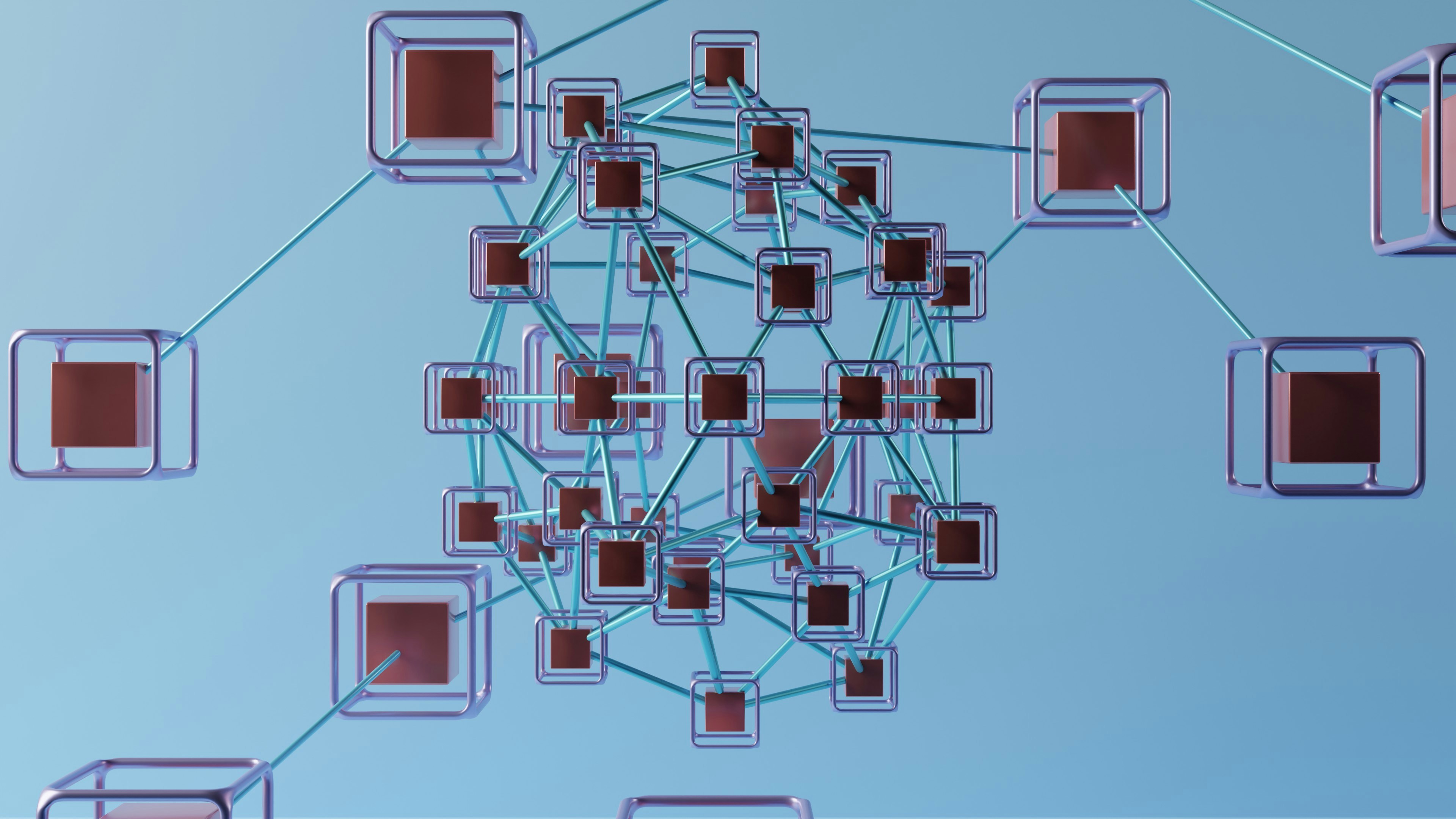
Hybrid Protocol Stacking: Layer Humanity Protocol ZK biometrics with Orange zkTLS multi-source social proofs.
-
Regular Circuit Audits: Conduct periodic audits of ZK circuits in Humanity Protocol and similar systems.
-
Liveliness Re-challenges: Deploy time-sensitive challenges per Proof of Commitment and Midnight Proof of Life.
-
Delegation with Revocation: Enable private delegation via Kite Protocol.
-
Treasury-Funded Bounties: Reward exploit discoveries from DAO treasury funds.
Kleros’ PoH upgrades with video-ZK hybrids address accessibility, while BingX notes palm biometrics’ bot-proof edge. Billions Network’s Privado ID rollout on Polygon DAOs exemplifies production readiness: anonymous votes, ironclad resistance.
Forward-thinking DAOs like those on zkSync or Midnight now embed these natively. Kite’s delegation lets power flow privately, revokable sans traces. LinkDID aggregates IDs cross-chain, proving uniqueness ecosystem-wide. Orange’s zkTLS bundles Web2 humanity sans handles, perfect for Farcaster-heavy communities.
From my vantage advising asset allocation, ZK proofs DAO governance via private PoH isn’t a feature; it’s infrastructure. It enforces one-person-one-vote in shadows, yielding consistent, trust-anchored returns on collective intelligence. Deploy it, and watch Sybils scatter like overleveraged positions in a downturn.
About the Author