

Imagine you’re a DAO member pouring your heart into a proposal that could reshape your community’s future. You cast your quadratic vote, carefully allocating tokens to signal true conviction. But in the glaring light of public blockchains, whales spot your move, bribe runners slide into DMs, and your voice gets drowned or bought out. Enter Fully Homomorphic Encryption (FHE) – the cryptographic powerhouse flipping this script for FHE DAO voting. It lets smart contracts crunch numbers on encrypted votes, keeping individual choices hidden while spitting out accurate, tamper-proof results. No more coercion, no whale dominance, just pure, private DAO governance.

This isn’t pie-in-the-sky theory. Projects like Fhenix are rolling out FHE on Ethereum, enabling encrypted quadratic voting DAOs where computations happen blindly. Votes stay confidential end-to-end, shielding against the very threats that plague open voting: vote-buying syndicates and oversized token holders swinging outcomes. As DAOs scale into billion-dollar treasuries, confidential DAO voting isn’t optional – it’s survival.
FHE Wins for DAO Voting
-

Coercion Resistance: Votes stay encrypted end-to-end, preventing bribes or pressure—nobody sees individual choices, just like Shutter Network’s Permanent Shielded Voting with Snapshot.
-

Whale-Proof Quadratic Mechanisms: Compute quadratic voting costs on encrypted data, neutralizing token whales for fairer power distribution via FHE like Zama’s fhEVM.
-

Verifiable Public Tallies: Homomorphic ops sum encrypted votes for transparent, auditable results without revealing secrets—Fhenix style private tallies.
Cracking the FHE Code for Bulletproof Ballots
FHE sounds like sci-fi, but it’s dead simple at heart: perform math on ciphertext as if it were plaintext. Traditional encryption demands decryption first – a privacy killer for on-chain voting. FHE skips that step. Encrypt your vote weight, send it to the contract, and watch it aggregate with others under wraps. Decrypt only the final tally. Boom – private DAO governance with full verifiability.
Take quadratic voting, where vote power scales with the square root of tokens spent, curbing whale influence. Publicly, it’s still gameable; adversaries track spends and pressure voters. FHE encrypts those spends, computes the square roots homomorphically, and sums privately. Recent integrations, like Shutter Network’s shielded voting on Snapshot, blend FHE with zero-knowledge proofs for extra muscle. Votes stay secret, but anyone can audit the math post-tally.
Quadratic Voting Reborn: No More Pay-to-Win Proposals
Quadratic funding has been a game-changer for DAOs, rewarding broad support over deep pockets. Yet on transparent chains, it’s vulnerable. Whales front-run by buying influence; colluders coordinate buys. FHE erects an iron wall. Encrypted inputs mean no peeking mid-vote, no targeted bribes. Zama’s fhEVM pushes this further, baking FHE into Ethereum-compatible VMs for seamless Fhenix FHE DAOs.
Picture this: You allocate 100 tokens to a proposal. Encrypted, it’s indistinguishable from a whale’s 10,000. The contract homomorphically applies the quadratic formula – sqrt(100) vs sqrt(10,000) – without exposing amounts. Aggregate across thousands, decrypt the total score. Equitable, coercion-resistant, and composable with existing DeFi. No wonder Fhenix’s devnet has devs buzzing about anonymous DAO proposals.
Pioneers Paving the FHE Path in Web3
Fhenix leads the charge, bringing FHE to Ethereum and Arbitrum for private smart contracts. Their manifesto eyes a $100 trillion encrypted Web3, starting with governance. Redact complements this with confidential asset management, hiding balances that fuel vote power. Together, they tackle the full stack: private votes, hidden holdings, public outcomes.
Shutter Network’s threshold-homomorphic tricks add real-time shielding, while ongoing optimizations chip away at FHE’s compute heft. Scalability hurdles? Sure, but breakthroughs in TFHE schemes are slashing costs. For DAO founders eyeing confidential voting, these tools mean graduating from toy democracies to robust, whale-proof systems. The edge? Yours to protect.
But let’s get real – FHE isn’t without its growing pains. The heavy lifting of homomorphic ops chews through gas like a Hummer in a traffic jam. Early tests clocked evaluations at thousands of times slower than plain Ethereum txs. That’s where innovators like Fhenix shine, optimizing TFHE schemes for EVM chains. Their Arbitrum integration slashes latency, making encrypted quadratic voting DAOs feasible for production DAOs today.
Overcoming Hurdles: Scalability Meets Privacy
Scalability? Zama’s fhEVM tackles it head-on, compiling Solidity to FHE-native ops without rewriting contracts. Pair that with off-chain key management from Shutter Network’s Permanent Shielded Voting on Snapshot, and you’ve got a hybrid beast: private votes during the frenzy, public proofs after. No more waiting weeks for off-chain tallies that breed distrust. These combos ensure confidential DAO voting scales to thousands of members without buckling.
Cost is dropping fast too. Fhenix’s devnet demos show quadratic tallies under 10 seconds for 1,000 votes – a far cry from yesterday’s hours-long slogs. As hardware accelerators mature, expect FHE to undercut ZK proofs in cost for vote aggregation. My take? DAOs ignoring this now risk obsolescence when whale-proof governance becomes table stakes.
Steps to Launch FHE Quadratic Voting
-

Choose FHE stack: Select Fhenix for Ethereum FHE privacy or Zama fhEVM for confidential DAOs.
-

Integrate Snapshot & Shutter: Combine with Snapshot’s Permanent Shielded Voting via Shutter Network for private, verifiable quadratic votes.
-
Test on devnet: Prototype on Fhenix devnet to validate encrypted quadratic computations without decryption.
-
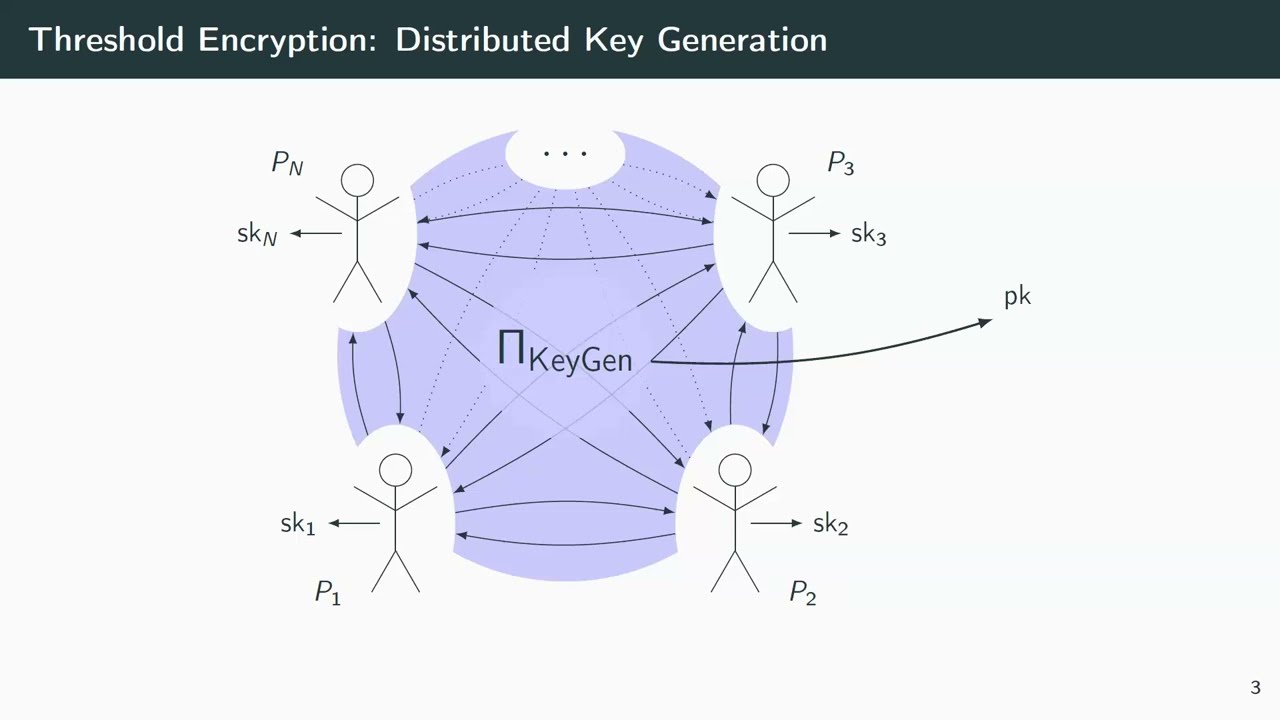
Deploy with threshold keys: Go live using threshold cryptography for secure, whale-proof key management and bribe resistance.
Real-World Wins: Fhenix FHE DAOs in Action
Fhenix isn’t just talking; their Ethereum privacy layer powers private DeFi with governance baked in. Imagine funding rounds where quadratic votes on encrypted balances decide allocations – no more sybil farms gaming token weights. Redact takes it further, masking asset holdings so vote power stays blind to outsiders. Recent pilots blend these for anonymous DAO proposals, where submitters encrypt ideas until quorum unlocks them.
Take a mid-cap DAO treasury at $50M: traditional voting lets a 20% whale dictate terms. FHE flips it – quadratic math on ciphertexts equalizes voices, verifiable via ZK. Shutter’s Snapshot collab already shields live votes, proving the tech’s battle-ready. For founders, this means transforming DAO governance security without ditching composability.
Challenges persist, sure – key rotation for thresholds demands vigilant multisigs, and bootstrap trust in FHE auditors. But the payoff? Coercion-proof systems where bribes bounce off encrypted walls. Quadratic voting evolves from idealistic to ironclad, letting diverse voices steer billion-dollar ships.
FHE vs Traditional DAO Voting
| Aspect | FHE | Traditional DAO Voting |
|---|---|---|
| Privacy | Full 🔒 | None 👀 |
| Whale Resistance | High 🛡️ | Low 🐋 |
| Verifiability | Public Proofs ✅ | Off-chain ? |
| Scalability | Improving 📈 | Proven ⚖️ |
Your Playbook for FHE DAO Dominance
Ready to shield your DAO? Start small: fork Fhenix’s devnet templates for quadratic experiments. Layer in Shutter for hybrid shielding. Monitor Zama’s fhEVM mainnet for seamless upgrades. Tools like these turn privacy from buzzword to bedrock. As crypto whales circle bigger treasuries, private DAO governance via FHE isn’t a luxury – it’s your moat.
Decode the tech, deploy the edge. The charts don’t lie: FHE adoption curves mirror early ZK’s hockey stick. Get ahead, or get gamed.
About the Author