What is a Confidential DAO?
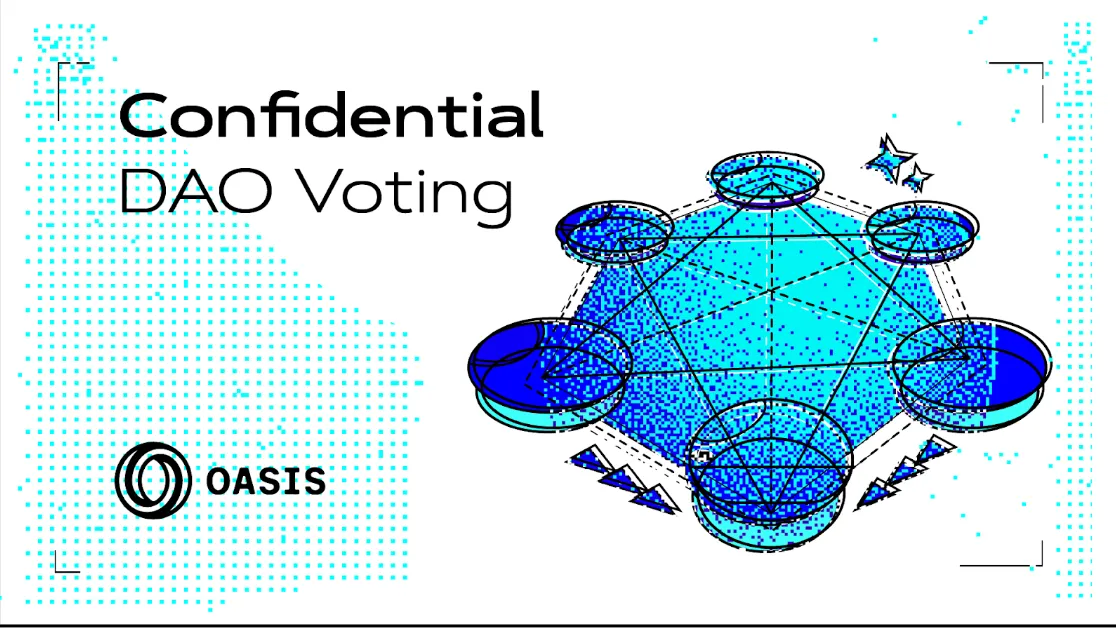
A confidential DAO is a decentralized autonomous organization that uses zero-knowledge proofs (ZKPs) to verify governance actions without exposing voter identities or sensitive proposal data. In standard DAOs, every vote is public on-chain, which can lead to voter coercion, front-running, or reputational risk for participants. Confidential DAOs solve this by allowing members to prove they hold valid voting tokens and cast valid votes while keeping the actual choices and identities hidden from the public ledger.
This architecture is particularly useful for high-stakes governance, such as treasury management or regulatory compliance, where privacy is legally required or strategically necessary. For example, platforms like Oasis enable privacy-enabled contracts that shield voter identities and conceal proposal results, selectively applying confidentiality only where needed. This approach improves governance quality by removing social bias and pressure from the voting process, ensuring that decisions reflect genuine community sentiment rather than external influence.
While offering significant privacy benefits, confidential DAOs introduce complexity in proof verification and potential regulatory scrutiny. Organizations must carefully balance anonymity with the need for auditability, especially in jurisdictions with strict anti-money laundering (AML) laws. The tradeoff is clear: you gain privacy and integrity at the cost of increased technical overhead and potential compliance challenges.
Confidential daos choices that change the plan
Building a confidential DAO means balancing privacy with the regulatory burden of proving legitimacy. Zero-knowledge proofs (ZKPs) allow members to hide their identities while still demonstrating that they meet governance criteria, such as holding specific tokens or passing KYC checks. However, this technical layer introduces distinct tradeoffs in complexity, cost, and auditability that leaders must evaluate before deployment.
The primary advantage is the reduction of coercion and vote-buying. When voting power is shielded from public view, it becomes harder for large holders to pressure smaller participants. This improves the quality of governance decisions by removing social bias. However, the opacity can also make it difficult for external auditors to verify that no single entity controls the outcome, which may raise red flags for regulators concerned about centralized manipulation.
Confidential dao choices that change the plan
| Feature | Confidential DAO | Traditional Transparent DAO |
|---|---|---|
| Voter Privacy | High; identities and votes are hidden via ZKPs. | Low; all votes and holdings are public on-chain. |
| Regulatory Audit | Complex; requires proving compliance without revealing data. | Simple; all data is visible and easily auditable. |
| Governance Security | Reduces vote-buying and coercion risks. | Vulnerable to whale pressure and social influence. |
| Technical Complexity | High; requires specialized ZK-proof infrastructure. | Low; relies on standard smart contract logic. |
Implementing these systems requires careful selection of infrastructure. Platforms like Oasis enable privacy-enabled contracts that shield voter identities and conceal proposal results selectively. While this improves user experience and governance integrity, it demands a higher level of technical literacy from the community. Leaders must decide whether the benefit of privacy outweighs the cost of maintaining a more complex, less transparent system.
Choose the next step
Confidential DAOs works best as a clear sequence: define the constraint, compare the realistic options, test the tradeoff, and choose the path with the fewest hidden costs. That order keeps the advice usable instead of decorative. After each step, pause long enough to check whether the recommendation still fits the reader's actual situation. If it depends on perfect timing, unusual access, or a best-case budget, include a simpler fallback.
Spotting Weak Confidential DAO Options
Not every project claiming zero-knowledge privacy delivers on the promise. Many "confidential DAOs" rely on weak or misleading implementations that leave member identities and vote tallies exposed. Before integrating, run these checks to separate real privacy from marketing language.
Vulnerable Option 1: Pseudonymous Voting Without ZKPs Some platforms mask voter addresses with simple pseudonyms or off-chain signature schemes. These methods do not use zero-knowledge proofs to verify eligibility. If the protocol relies on a public ledger for the final tally, anyone can trace the pseudonym back to a wallet history. True confidentiality requires on-chain ZKPs that prove a vote is valid without revealing the voter or the specific choice.
Vulnerable Option 2: Selective Transparency Traps A common mistake is using confidential contracts only for the initial vote, then publishing raw results immediately. While this might seem efficient, it often allows data analysts to correlate transaction metadata with known entities. Look for projects that maintain end-to-end confidentiality. As noted by Oasis Protocol, privacy-enabled contracts should shield voter identities and conceal proposal results until a trusted threshold is met [src-serp-1].
Vulnerable Option 3: Weak Governance Tokens Some DAOs claim privacy but use governance structures where token holders are publicly identifiable by default. If your governance token is a standard ERC-20 without privacy layers, your voting power is visible to everyone. This defeats the purpose of confidential voting, which aims to remove bias and coercion from the process [src-serp-2]. Ensure the token standard itself supports zero-knowledge state verification.
FAQ: Confidential DAOs and Privacy
These answers address common questions about decentralized autonomous organizations (DAOs), their safety, structure, and control mechanisms in the context of zero-knowledge privacy.
No comments yet. Be the first to share your thoughts!