What makes confidential DAOs different
Traditional decentralized autonomous organizations (DAOs) operate on transparent blockchains where every vote, treasury movement, and proposal is publicly visible. While transparency supports accountability, it creates significant friction for high-stakes governance. In these environments, voter identity is exposed, making participants vulnerable to coercion, doxxing, or targeted attacks from competitors or hostile actors. Confidential DAOs address this vulnerability by decoupling governance participation from public identity.
The core differentiator lies in the use of zero-knowledge proofs (ZKPs) and trusted execution environments (TEEs). Zero-knowledge proofs allow a participant to prove they are eligible to vote and that their vote was counted correctly without revealing their identity or the specific content of their vote. Trusted execution environments, such as those provided by the Sapphire network (an evolution of the Oasis network), create secure, isolated hardware zones where sensitive data can be processed off-chain or in encrypted form, ensuring that even the node operators cannot see the raw inputs.
For example, Oasis Protocol’s documentation highlights how privacy-enabled contracts can shield voter identities and conceal proposal results. This architecture allows DAOs to implement confidential surveys or voting mechanisms where the outcome is verifiable, but the individual choices remain private. This capability is critical for organizations handling sensitive intellectual property, regulatory compliance data, or internal strategic decisions where public disclosure could compromise competitive advantage or legal standing.
By integrating these technologies, confidential DAOs shift the governance model from "public verification" to "private verification." This distinction is not merely technical; it redefines how legal entities can interact with blockchain infrastructure while maintaining the confidentiality required by traditional business standards and emerging regulatory frameworks in jurisdictions like the EU and US as of 2026.
Why regulators are targeting on-chain privacy
The regulatory landscape for decentralized autonomous organizations (DAOs) is shifting from ambiguity to active enforcement, with a particular focus on on-chain privacy. Regulators in the European Union and the United States are increasingly scrutinizing anonymous voting mechanisms and privacy-preserving protocols that obscure the identity of token holders and voters. This scrutiny stems from concerns that such features can facilitate money laundering, terrorist financing, and the evasion of sanctions.
In the European Union, the Markets in Crypto-Assets (MiCA) regulation, which entered into force in 2023 and is being phased in through 2024 and 2025, explicitly targets the anonymity of crypto-asset service providers. MiCA requires strict Know Your Customer (KYC) and Anti-Money Laundering (AML) checks for entities issuing or trading crypto-assets. For DAOs operating within or targeting EU citizens, this means that privacy-enhancing tools, such as zero-knowledge proofs used for confidential voting, may come under intense regulatory pressure if they cannot be reconciled with identity verification requirements.
US agencies, including the Financial Crimes Enforcement Network (FinCEN) and the Securities and Exchange Commission (SEC), have long maintained that anonymous participation in financial systems poses significant risks. The US approach often relies on existing AML laws rather than new crypto-specific statutes, but the application is becoming more precise. Regulators are particularly concerned with DAOs that facilitate anonymous transactions or voting, as these structures can hinder the ability of authorities to trace illicit funds. Recent enforcement actions have highlighted that the lack of transparency in on-chain activities does not exempt entities from compliance obligations.
The tension between technological privacy and regulatory transparency is most visible in how DAOs manage their governance. While privacy tools like those found on Oasis Sapphire offer technical solutions for confidential voting, they create a compliance challenge. Regulators are not necessarily banning privacy technology, but they are demanding that DAOs implement mechanisms to identify voters when required by law. This creates a complex operational environment where DAOs must balance member privacy with the need to produce audit trails that satisfy legal standards in multiple jurisdictions.
How zero-knowledge proofs enable compliance
Zero-knowledge proofs (ZKPs) provide the cryptographic foundation for confidential DAO governance by allowing a network to verify the validity of a transaction or vote without revealing the underlying data. In the context of regulatory compliance, this mechanism resolves the tension between public auditability and individual privacy. A DAO can cryptographically demonstrate that a voter is eligible and has not double-spent their voting power, while keeping the specific choice and the voter’s identity hidden from the public ledger.
This approach aligns with data protection principles such as those outlined in the European Union’s General Data Protection Regulation (GDPR), which mandates that personal data be processed lawfully and fairly. By using ZKPs, DAOs can limit data exposure to the absolute minimum required for verification. This is not merely a technical feature but a structural requirement for operating in jurisdictions with strict privacy laws.
The mechanics of confidential verification
The process relies on generating a proof that attests to the validity of the input data without exposing the input itself. When a member casts a vote on a privacy-enabled contract, such as those built on the Oasis Network or Sapphire, the system generates a cryptographic receipt. This receipt confirms that the vote meets all protocol rules—such as being cast by a unique, active member—without linking the vote to a specific wallet address or revealing the vote’s content to external observers.
Oasis Network’s documentation highlights that this architecture allows DAOs to shield voter identities and conceal proposal results while maintaining the integrity of the governance process. Similarly, Sapphire, a parallel EVM-compatible chain built by Oasis, enables confidential voting through its Oasis Privacy Layer (OPL). These implementations demonstrate that privacy is not an antithesis to compliance but a tool for it. By preventing the public exposure of sensitive governance data, these networks reduce the risk of voter coercion and front-running, which are significant concerns in traditional public blockchain governance.

Regulatory implications and future trends
As regulatory frameworks evolve, the ability to prove compliance without revealing identity will become increasingly critical. The European Union’s Markets in Crypto-Assets (MiCA) regulation, effective from 2024, imposes strict requirements on transparency and consumer protection. ZKPs offer a pathway for DAOs to meet these standards by providing auditable proof of eligibility and procedural fairness without compromising member privacy.
Looking ahead, the integration of ZKPs into DAO governance structures is expected to grow as more organizations seek to operate in regulated environments. The technical mechanisms described here are not theoretical; they are actively being deployed in production environments. For legal and compliance professionals, understanding these cryptographic tools is essential for evaluating the legitimacy and sustainability of decentralized organizations in the coming years.
Real-World Implementations and Platforms
The transition from theoretical privacy models to operational infrastructure is underway, with specific platforms now enabling confidential DAO governance. These implementations address the regulatory tension between transparent blockchain ledgers and the need for private decision-making processes. By integrating privacy-preserving mechanisms into existing frameworks, these platforms allow organizations to shield voter identities and conceal proposal results while maintaining auditability.
Oasis Sapphire serves as a primary example of this integration. As a privacy-enabled EVM sidechain, Sapphire allows DAOs to execute confidential voting contracts. This architecture supports the selective application of confidentiality, meaning that while the transaction validity is verifiable on-chain, the specific voting intent remains hidden. This capability is critical for jurisdictions where voter privacy is legally mandated or where commercial sensitivity requires protection from public disclosure.
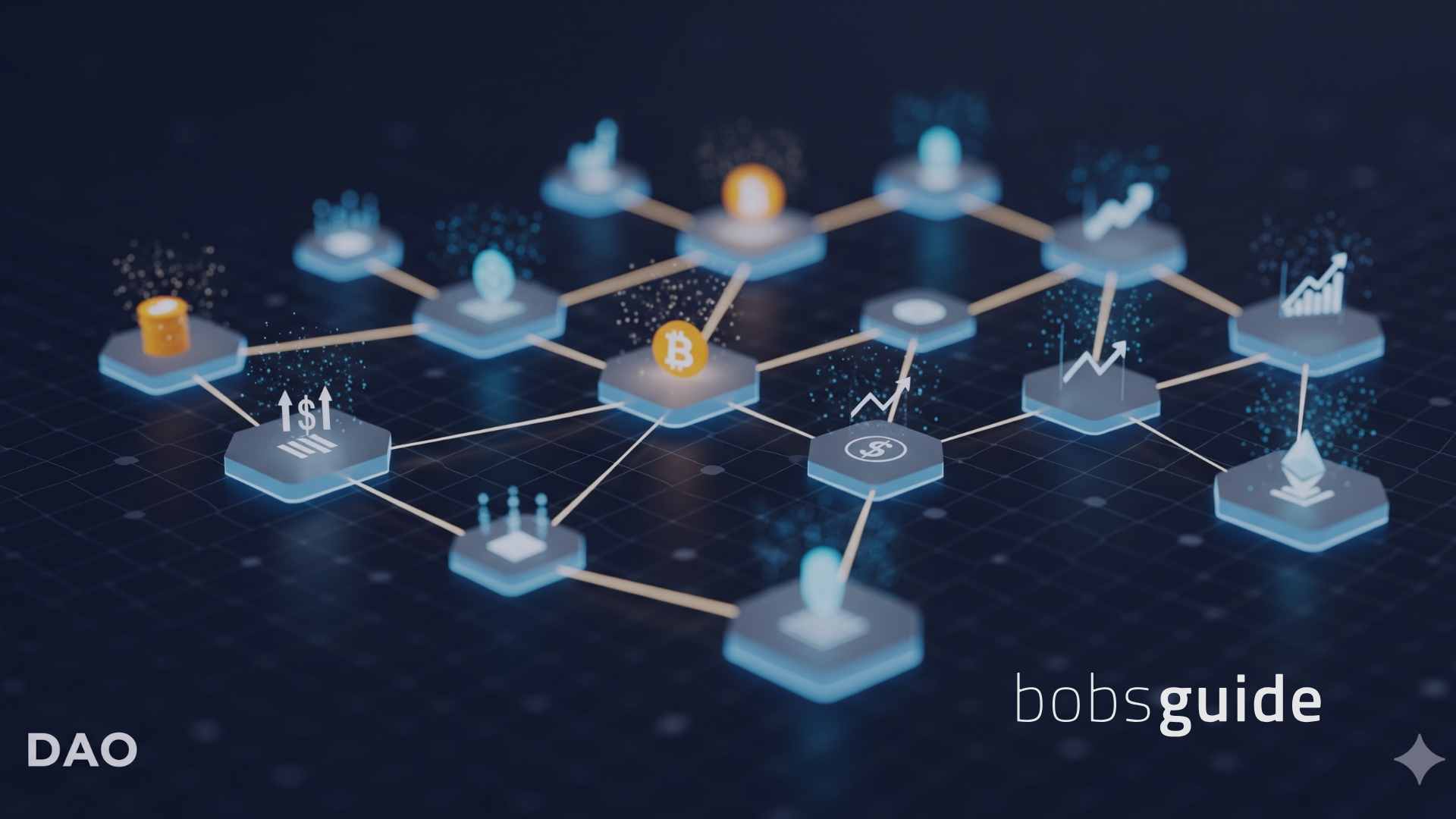
The operational mechanics rely on Oasis’s privacy layer to process votes without exposing individual selections. This approach improves governance utility by reducing coercion risks and preventing front-running based on voting intent. For legal compliance, this structure provides a clearer boundary between public transaction data and private governance actions, allowing DAOs to meet specific data protection standards without abandoning the transparency required by financial regulators.
When evaluating whether a platform supports compliant confidential voting, consider the following criteria:
-
Verify EVM compatibility with existing DAO frameworks
-
Confirm privacy layer supports selective disclosure
-
Ensure audit trails remain intact for regulatory review
-
Check for legal jurisdiction support in privacy terms
Common questions about confidential DAOs
The regulatory environment for decentralized autonomous organizations (DAOs) continues to evolve, particularly regarding privacy and compliance. Below are clarifications on safety, definitions, and current operational status based on 2025-2026 trends.
These answers reflect the current landscape as of 2026, where privacy-preserving technologies are increasingly integrated into compliant DAO frameworks.
No comments yet. Be the first to share your thoughts!