

In the evolving landscape of decentralized autonomous organizations, confidential DAO voting emerges as a critical safeguard against vote-shaming, a pervasive threat that erodes genuine participation. Transparent blockchains, while ensuring verifiability, inadvertently expose individual choices, inviting social pressures, coercion, and retaliation. This vulnerability not only distorts decision-making but also discourages quieter voices essential for balanced governance. Privacy-preserving mechanisms restore integrity, allowing members to vote their convictions without fear.

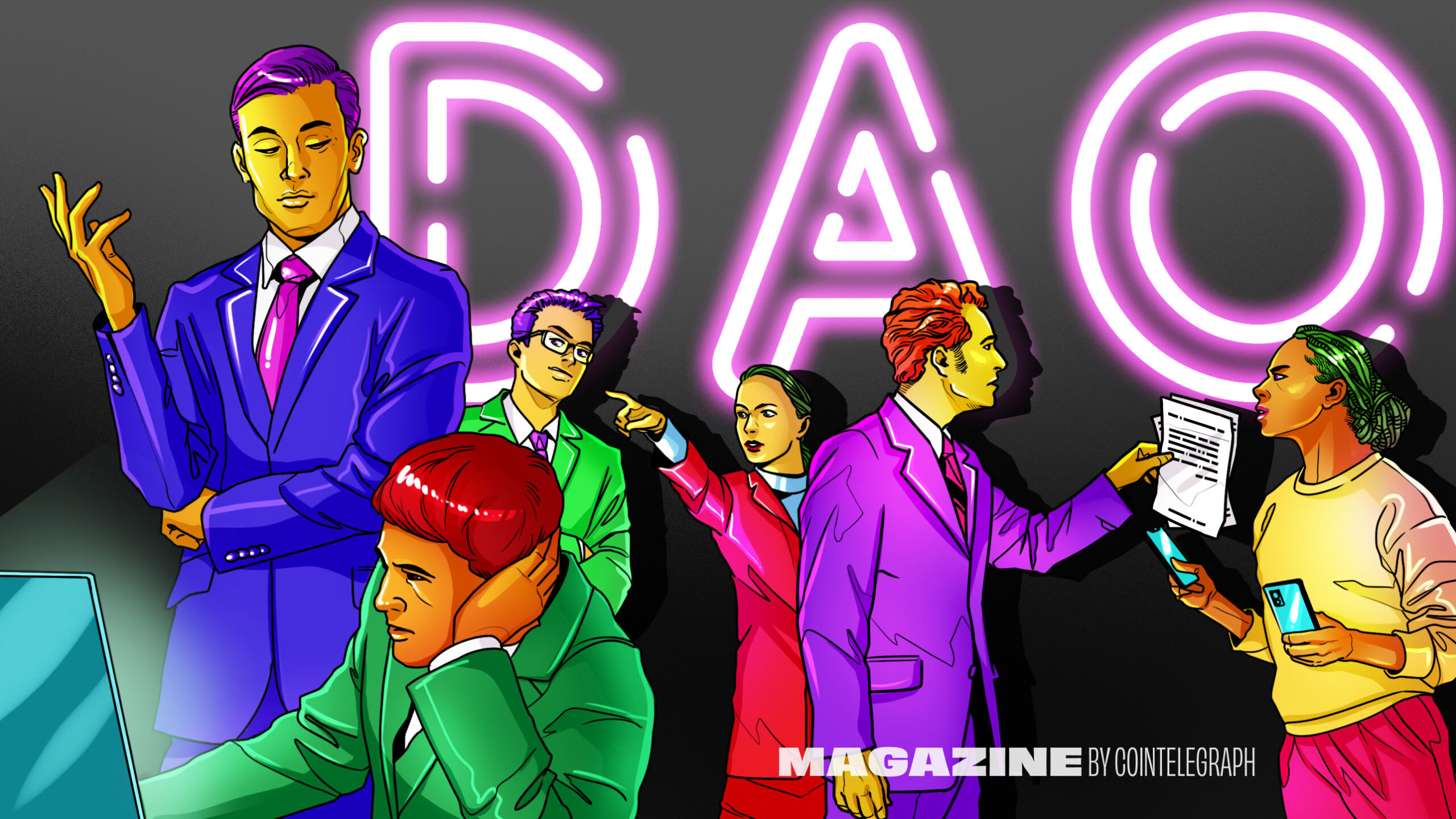
DAOs thrive on collective intelligence, yet public voting logs undermine this ideal. High-profile cases reveal how visible opposition to popular proposals leads to reputational attacks or exclusion from communities. Such dynamics mirror centralized politics, where dissent invites backlash, contradicting the decentralized ethos. Private DAO governance counters this by concealing voter identities and preferences during the process, revealing only aggregate outcomes post-tally.
Exposing the Vote-Shaming Paradox in Transparent Systems
Blockchain’s immutable transparency, a cornerstone of trust, paradoxically fosters toxicity in governance. Every transaction, including votes, becomes a permanent public record. In token-weighted systems, whale votes dominate visibility, but even small holders face scrutiny if their stance diverges. Research from the Privacy Stewards of Ethereum’s State of Private Voting 2026 underscores vote updatability and delegation as features demanding confidentiality to prevent mid-process shaming.
Key Risks of Transparent DAO Voting
-
Coercion: Voters face external pressure or threats to vote a certain way, as seen in traditional systems vulnerable to vote buying and intimidation (Semantic Scholar).
-

Social Pressure: Public vote visibility enables vote-shaming and peer influence, undermining free choice in DAOs (confidentialdaos.com).
-

Manipulation: Adversaries exploit visible votes for targeted bribery or strategic influence, increasing economic attack costs only via frameworks like B-Privacy (arxiv.org).
-

Exclusion: Fear of retaliation deters minority voices, reducing diverse participation in governance (Privacy Stewards of Ethereum).
-

Distorted Outcomes: Transparency biases results toward majority views, skewing decisions away from true consensus (Furt’Her Blockchain Privacy Paradox).
Consider a treasury allocation proposal: supporters publicly celebrate, while dissenters endure Discord pile-ons or token dumps signaled via on-chain activity. This chills participation, skewing results toward vocal majorities. Secure DAO voting systems must prioritize DAO vote privacy to foster authentic expression.
Zero-Knowledge Proofs: Proving Validity Without Revelation
Zero-knowledge proofs DAOs represent a cryptographic breakthrough, enabling voters to demonstrate compliance with rules – like one-person-one-vote or token-holding thresholds – sans disclosing choices. Semaphore, a prominent implementation, groups voters into anonymity sets, where proofs confirm membership and validity without linking to wallets. This nullifies coercion attempts, as adversaries cannot target specific dissenters.
Projects like Veil Protocol’s Midnight platform exemplify this via OpenVote, a DApp for private, verifiable votes using ZK proofs. Voters interact with one-wallet-one-vote semantics, tallying outcomes verifiably yet confidentially. Harvard’s exploration of ZK on blockchain for voting echoes these benefits, addressing transparency concerns plaguing electronic systems.
“Blockchains are designed to be transparent and immutable, recording every transaction for anyone to see. Zero-Knowledge Proofs solve this privacy paradox. ” – Furt’Her on Blockchain Privacy
Homomorphic Encryption: Tallying in the Dark
Complementing ZKPs, homomorphic encryption permits computations on ciphertexts, ideal for vote aggregation. S2DV’s scalable DAO voting leverages this for confidentiality, computing sums on encrypted ballots. Only the final decrypted tally emerges, shielding interim results from influence.
Shutter Network’s Shielded Voting exemplifies real-world application, maintaining secrecy until period’s end. Semantic Scholar’s review of ZK-secured systems highlights mitigation of coercion and buying, challenges plaguing traditional methods. For DAOs, this ensures privacy-centric governance without verifiability trade-offs.
These tools collectively dismantle vote-shaming’s foundation. Yet, as DAOs scale, integrating delegation and updatability privately demands further innovation. Private vote delegation via protocols like Kite allows revocable power transfer sans disclosure, preserving flexibility.
The B-Privacy framework takes this further by quantifying privacy in weighted DAO systems. Unlike uniform voting, DAOs often allocate influence by token holdings, creating bribery incentives if tallies leak incrementally. B-Privacy introduces controlled noise into partial results, raising the economic bar for adversaries. This measured approach, detailed in recent arXiv research, fortifies secure DAO voting systems against targeted manipulation.
Trusted Execution Environments: Hardware-Backed Secrecy
Trusted Execution Environments offer a complementary layer, isolating vote processing within tamper-proof processor enclaves. Oasis Network deploys TEEs for DAO governance, decrypting and tallying ballots solely within secure boundaries. Verifiable outputs emerge without exposing raw data, ideal for high-stakes decisions like treasury deployments. This hardware-rooted method sidesteps pure cryptographic overhead, appealing to DAOs prioritizing speed alongside DAO vote privacy.
Comparison of Privacy-Preserving Technologies in DAOs
| Technology | Description | Pros | Cons | Examples |
|---|---|---|---|---|
| Zero-Knowledge Proofs (ZKPs) | Proves vote validity without revealing identity or choice | ✅ Strong anonymity ✅ Verifiable correctness ✅ Decentralized, no central trust |
❌ Computationally intensive for proving ❌ Complex setup and implementation |
Semaphore Veil Protocol (Midnight Vote) OpenVote |
| Homomorphic Encryption (HE) | Tallying votes on encrypted data without decryption | ✅ Votes remain private until final tally ✅ Mathematically secure aggregation ✅ Supports threshold decryption |
❌ High computational and bandwidth overhead ❌ Key management complexity |
Shutter Network (Shielded Voting) S2DV |
| Trusted Execution Environments (TEEs) | Hardware isolation for confidential vote processing | ✅ High performance and low latency ✅ Relatively simple integration ✅ Remote attestation for verifiability |
❌ Relies on hardware vendor trust ❌ Vulnerable to side-channel attacks ❌ Potential supply chain risks |
Oasis Network |
These mechanisms – from ZKPs and homomorphic encryption to delegation protocols and TEEs – form a robust arsenal against vote-shaming. Yet implementation demands careful selection based on DAO scale, proposal sensitivity, and technical maturity. Smaller collectives might favor Semaphore’s simplicity, while enterprise DAOs lean toward Oasis’s audited enclaves.
Real-world adoption underscores their potency. Midnight’s OpenVote, backed by Project Catalyst, delivers one-wallet-one-vote ZK voting, verifiable yet shielded. Shutter Network shields ongoing tallies, preventing mid-vote swings from visible momentum. Kite’s delegation ensures representatives wield power blindly, revocable at any juncture without trace.
Balancing Privacy with Auditability
Critics question if excessive secrecy invites fraud, but privacy tools embed verifiability. ZKPs cryptographically attest correctness; homomorphic schemes yield auditable ciphertexts; TEEs provide remote attestation. Post-vote, members verify aggregates against proofs, upholding blockchain’s trust-minimized ethos. This equilibrium empowers private DAO governance that withstands scrutiny.
Challenges persist: computational intensity of ZKPs burdens smaller chains; TEEs rely on hardware trust assumptions. Ongoing research, like S2DV’s scalable designs, addresses these, promising broader accessibility. The Council of Europe’s blockchain-for-human-rights report highlights such innovations’ role in ethical governance, from aid distribution to rights protection.
Forward-thinking DAOs integrate these natively. Governance frameworks now mandate confidential modes for contentious votes, like funding allocations or membership disputes. By shielding preferences, they cultivate diverse input, curbing whale dominance and echo chambers. Vote updatability, as noted in Ethereum’s private voting state, flourishes privately, letting convictions evolve sans public flip-flopping stigma.
Ultimately, confidential voting reclaims DAOs’ promise: uncoerced, intellect-driven consensus. As protocols mature, expect widespread shifts from transparent ledgers to hybrid privacy models. Innovators prioritizing zero-knowledge proofs DAOs and encrypted tallies will lead, their governance resilient to shaming’s chill. Members vote freely, decisions reflect true will, and decentralized autonomy endures uncompromised.
About the Author