The 2026 regulatory landscape for web3
The year 2026 marks a definitive shift from ambiguous enforcement to structured compliance frameworks for decentralized organizations. Global regulators have moved past the initial phase of reactive policing, establishing clearer boundaries for data privacy and anonymous structures within the web3 ecosystem. This transition provides the legal certainty that institutional participants require, even as it imposes stricter obligations on DAO governance.
Key developments in 2026 focus on harmonizing cross-border data standards. The World Economic Forum’s annual meeting in Davos highlighted the urgent need for interoperable regulatory tech (RegTech) solutions that can satisfy multiple jurisdictions simultaneously. For Confidential DAOs, this means that privacy-preserving technologies are no longer optional features but foundational requirements for legal operation.
"The Annual Meeting 2026 of the World Economic Forum will take place at Davos-Klosters from 19th to 23rd January." World Economic Forum
Simultaneously, academic and industry bodies are driving the conversation on compliance. The upcoming Privacy Symposium in April 2026 will serve as a critical venue for discussing how data regulation intersects with decentralized identity. These events signal that privacy is becoming a central pillar of web3 policy, rather than a peripheral concern. Organizations must now align their internal protocols with these emerging global standards to mitigate regulatory risk.
Zero-knowledge proof compliance mechanisms
Confidential DAOs face a structural paradox: regulators demand transparency, while members require privacy. Zero-knowledge proofs (ZKPs) resolve this conflict by allowing the network to verify the truth of a statement without revealing the underlying data. This cryptographic technique enables a DAO to prove it meets regulatory standards without exposing the identities of its participants or the specifics of its transactions.
The process relies on a "prover" generating a cryptographic proof that a computation was performed correctly. A "verifier" then checks this proof against the public ledger. If the proof is valid, the regulator can confirm compliance—such as ensuring no sanctioned addresses are involved in a vote or transaction—without ever seeing the private data that generated the proof. This decouples verification from disclosure, a critical distinction for high-stakes legal compliance.
This mechanism shifts the burden of proof. Instead of relying on self-reported data that can be falsified, the protocol itself enforces compliance through code. As the Confidential Computing Summit 2026 highlights, the industry is moving toward integrating these cryptographic standards into core infrastructure to ensure sovereignty and auditability coexist [Linux Foundation, 2026].
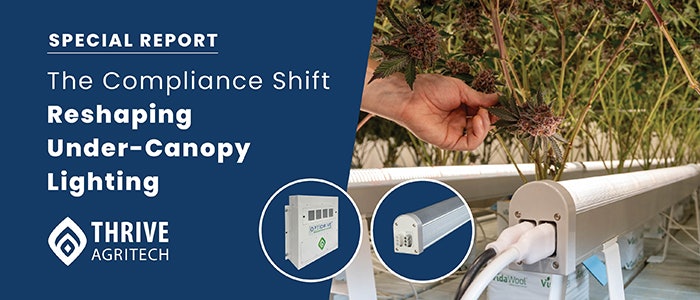
The legal implications are significant. By embedding compliance into the cryptographic layer, DAOs create an immutable record of adherence to law. This reduces the risk of regulatory backlash by providing auditors with verifiable evidence rather than opaque claims. The technology does not eliminate the need for legal frameworks, but it provides a robust technical foundation for them to operate upon.
Anonymous voting systems under scrutiny
The shift toward anonymous voting in decentralized autonomous organizations (DAOs) has triggered a regulatory reckoning. While anonymity protects voter privacy, it creates significant friction with anti-money laundering (AML) frameworks. Regulators are increasingly viewing untraceable voting mechanisms as potential vectors for illicit finance, forcing DAOs to choose between democratic purity and regulatory compliance.
The core tension lies in the conflict between on-chain privacy and off-chain accountability. Traditional AML laws require Know Your Customer (KYC) verification, which assumes a link between a digital identity and a real-world person. Anonymous voting protocols, however, are designed precisely to sever this link. This structural incompatibility means that DAOs utilizing purely anonymous voting systems are operating in a legal gray area that is rapidly closing.
Recent guidance from financial authorities suggests that "decentralization" is not a shield against AML requirements. If a DAO’s voting outcomes can influence financial flows or asset transfers, the participants involved may be subject to reporting obligations. This interpretation forces DAOs to implement hybrid models, where voting remains pseudonymous but participant identity is verified through trusted third parties or zero-knowledge proofs that satisfy regulatory thresholds without revealing full identities.
The industry is watching closely as major jurisdictions begin to codify these expectations. The lack of uniform standards means that a DAO compliant in one jurisdiction may be non-compliant in another. This fragmentation creates operational risks for global DAOs, which must navigate a patchwork of rules regarding voter identification and vote auditing. The result is a slow but steady move away from pure anonymity toward verified, yet privacy-preserving, voting architectures.
Key privacy conferences shaping policy
The regulatory landscape for confidential computing is being defined by a series of high-stakes industry gatherings in 2026. These events serve as the primary venues where policymakers, legal experts, and technology leaders negotiate the boundaries of data sovereignty and DAO governance.
The Confidential Computing Summit 2026, hosted by the Linux Foundation in San Francisco on June 23-24, establishes the technical baseline for secure computation. The schedule highlights the integration of privacy-preserving technologies into AI infrastructure, a critical component for transparent DAO operations.
The summit focuses on the architecture required to protect data in use, ensuring that confidential computing becomes the standard for regulatory compliance.
In Washington, DC, the Privacy + Security Forum (November 4-6) shifts the focus to legislative alignment. Organized by the Privacy Security Academy at George Washington University, this event bridges the gap between technical implementation and federal regulatory expectations.
The Data Privacy Practitioner Summit in Seattle (September 2-3) offers a vendor-free environment for corporate privacy leaders. This gathering emphasizes practical governance frameworks, allowing organizations to refine their approaches to confidential data handling without commercial influence.
These conferences collectively shape the policy environment for confidential DAOs, providing the necessary context for navigating the new privacy regulations.
Monitor the outcomes of these summits to anticipate regulatory shifts before they impact your governance structure.
Community perspectives on DAO privacy
DAO operators are navigating a complex regulatory landscape where privacy and compliance often conflict. The introduction of Department of Commerce orders, such as the DAO 216-26 Fact Sheet, has heightened scrutiny on how decentralized entities handle sensitive data. Operators report that maintaining anonymity while satisfying government transparency requirements creates significant operational friction.
Industry discussions highlight the tension between open-source principles and legal mandates. At recent forums, including the Privacy + Security Forum, experts debated the technical feasibility of zero-knowledge proofs in regulated environments. Many DAO members argue that current frameworks do not adequately account for the distributed nature of blockchain governance.
The consensus among practitioners is that regulatory clarity remains elusive. While events like the Confidential Computing Summit focus on technological sovereignty, the legal community emphasizes the need for standardized compliance protocols. Until these gaps are addressed, DAOs will continue to operate in a state of legal uncertainty.
Compliance Checklist for Confidential DAOs
The Department of Commerce’s Departmental Order 216-26, effective June 4, 2026, establishes the baseline for statistical confidentiality and data protection. DAO operators must align their governance structures and data handling practices with these federal standards to avoid regulatory penalties. This checklist outlines the essential steps for achieving compliance.
Map every data point entering and exiting your DAO’s smart contracts. Identify any personally identifiable information (PII) or sensitive metadata that could violate confidentiality mandates under Order 216-26. Ensure that on-chain storage mechanisms do not inadvertently expose protected statistical data.
Deploy zero-knowledge (ZK) proofs to validate transactions without revealing underlying data. This cryptographic approach allows the DAO to prove compliance with voting thresholds or financial limits while keeping individual participant identities and specific transaction details private.

Define clear protocols for how long data is stored and when it is purged. Order 216-26 emphasizes the protection of confidential statistics. Configure your DAO’s off-chain storage solutions to automatically delete or anonymize data once its utility for governance or auditing has expired.
Schedule quarterly reviews of your DAO’s data practices against the latest federal guidelines. Engage third-party auditors specializing in confidential computing to verify that your encryption standards and access controls meet the rigorous requirements set forth by the Department of Commerce.
Adhering to these steps ensures your DAO operates within the legal framework while maintaining the privacy benefits that define confidential governance.
Frequently asked questions about DAO privacy
The intersection of confidential computing and decentralized governance is shifting from experimental to regulatory requirement. As 2026 enforcement deadlines approach, DAO operators must navigate new data sovereignty frameworks. The following questions address the most critical compliance concerns for privacy-focused decentralized organizations.
No comments yet. Be the first to share your thoughts!