What makes a confidential DAO different
A traditional DAO operates like a glass house. Every transaction, proposal, and vote is recorded on a public blockchain, visible to anyone who knows how to look. While this transparency builds trust in the code, it exposes members to real-world risks, including doxxing, targeted harassment, and front-running by competitors who can see large holdings before they are moved.
Confidential DAOs solve this by using zero-knowledge proofs (ZKPs) to verify actions without revealing the underlying data. Instead of publishing your vote choice, the system publishes a cryptographic proof that your vote was valid according to the rules. This allows the network to confirm that a proposal passed or that a treasury transfer is authorized, while keeping the specific details private.
The practical application of this technology shifts the focus from "who did what" to "what was approved." This distinction matters for governance sensitive to market movements or internal dissent. For example, a DAO managing a venture capital fund can execute trades based on collective decisions without signaling its strategy to the broader market. Similarly, members can vote on controversial internal policies without fear of external retaliation.
This shift introduces a tradeoff between verifiability and privacy. In a public DAO, anyone can audit the entire history of decisions. In a confidential DAO, auditors must rely on the correctness of the zero-knowledge circuit itself. While this requires trust in the cryptographic implementation, it offers a necessary layer of protection for organizations where anonymity is a feature, not a bug.
Comparing ZK governance platforms
Choosing a confidential DAO infrastructure provider requires balancing privacy guarantees with developer usability. Zero-knowledge proofs (ZKPs) are the engine behind private governance, allowing members to vote or transact without exposing sensitive data on-chain. However, not all platforms implement these proofs in the same way, and the tradeoffs between security, cost, and complexity vary significantly.
Oasis has established itself as a leader in this space with its Sapphire sidechain. By enabling encrypted smart contracts, Oasis allows DAOs to run voting mechanisms where vote counts are public but individual ballots remain secret. This approach is particularly effective for governance scenarios where voter coercion is a concern, such as treasury management or sensitive protocol upgrades. The platform’s maturity means developers can leverage existing Ethereum tooling, reducing the friction of adoption.
Other emerging platforms like OPAQUE and Aztec offer different architectural approaches. OPAQUE focuses heavily on confidential computing environments, often integrating with broader AI and data sovereignty needs, which may appeal to DAOs managing proprietary research or sensitive member data. Aztec, built on a rollup architecture, emphasizes scalability and privacy for financial transactions, making it a strong candidate for DAOs that prioritize private treasury operations alongside governance. Each platform solves the privacy problem differently, and the right choice depends on whether your primary need is secure voting, private treasury management, or both.
The following table outlines the core differences between these leading options to help you evaluate which fits your DAO’s specific requirements.
| Platform | Privacy Mechanism | Smart Contract Support | Maturity Level |
|---|---|---|---|
| Oasis Sapphire | Encrypted State (Confidential Smart Contracts) | EVM-compatible | Production |
| OPAQUE | Confidential Computing / SGX | Varies by Integration | Emerging |
| Aztec | Zero-Knowledge Rollups | Aztec Connect / Noir | Beta |
Where confidential voting actually matters
Confidential DAOs are not a universal upgrade for every on-chain vote. They are a specific tool for scenarios where public transparency creates real-world risk or operational friction. In these cases, the primary keyword cluster—confidential DAOs—provides the necessary privacy layer to protect participants without sacrificing the integrity of the governance process.
Corporate treasury management
When a DAO manages funds that resemble a traditional corporate treasury, public visibility can be a liability. If a DAO holds significant assets in volatile tokens or illiquid positions, broadcasting every vote to the blockchain allows competitors or malicious actors to front-run transactions or target the treasury. Confidential voting allows the DAO to tally the result of a treasury allocation without revealing how individual members voted or which specific proposals passed until execution is secure. This protects the organization from targeted attacks while maintaining the collective decision-making structure.
Sensitive treasury allocations
Not all funding decisions are suitable for public scrutiny. Consider a DAO that needs to allocate funds to sensitive partnerships, legal settlements, or internal audits. Publicly revealing these allocations can damage relationships with partners who require discretion or expose the DAO to regulatory scrutiny in jurisdictions with strict compliance laws. By using zero-knowledge proofs, the DAO can verify that the allocation follows its own rules and that the total amount matches the approved budget, all while keeping the specific details of the transaction private from the public ledger.
Anonymous contributor rewards
Many projects rely on contributors who wish to remain anonymous due to their employment status or personal safety concerns. In a standard DAO, claiming a reward often requires linking a wallet to a public identity, which defeats the purpose of anonymity. Confidential voting allows these contributors to prove their eligibility for rewards without revealing their identity to the broader community. This ensures that sensitive contributors can participate fully and be compensated fairly, fostering a more inclusive governance environment where privacy is respected rather than assumed to be unnecessary.
Balancing Privacy and Auditability
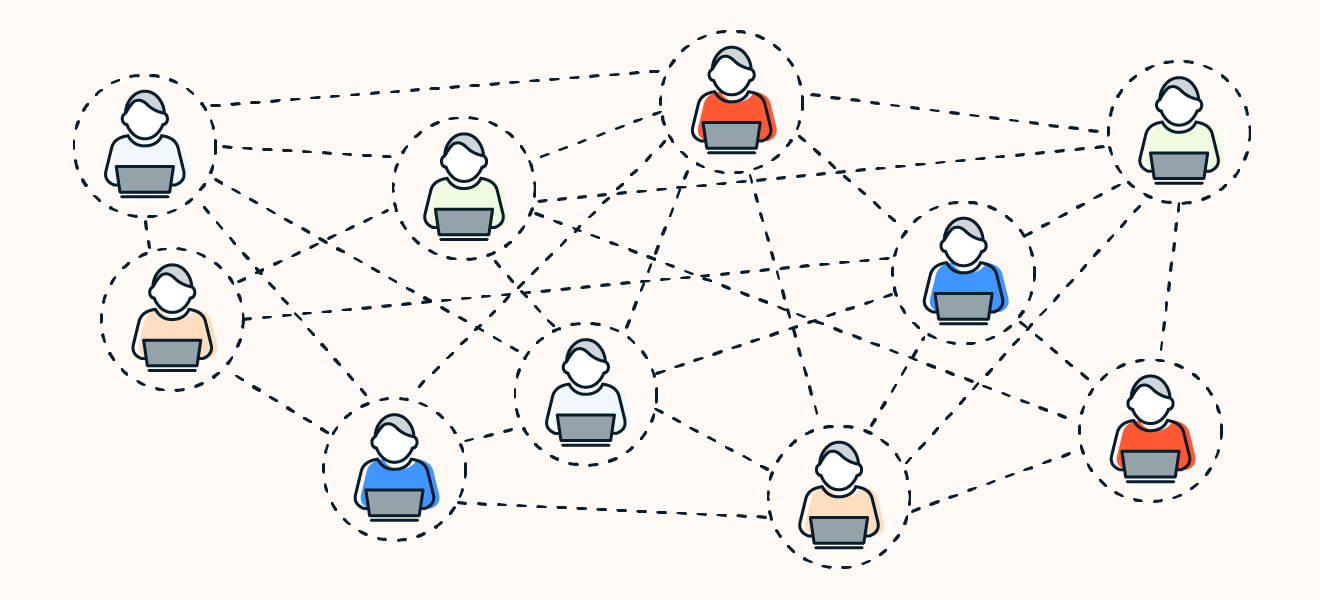
Confidential DAOs solve a fundamental governance paradox: how to keep individual voting records private while ensuring the final tally is accurate and tamper-proof. The answer lies in zero-knowledge proofs (ZK-SNARKs), which allow the network to verify that every vote was cast according to the rules without revealing who cast it.
This mechanism shifts the burden of trust from identity to cryptography. Instead of relying on a transparent ledger that exposes member behavior, the DAO relies on a mathematical proof that validates the aggregate result. This ensures that no single participant can be identified or coerced based on their voting history, yet any observer can confirm the outcome is legitimate.
The tradeoff is computational cost. Generating ZK proofs requires more processing power than standard transparent transactions. However, this overhead is the price of sovereignty. For high-stakes governance—such as treasury management or protocol upgrades—this cost is justified by the protection it offers against front-running, voter intimidation, and regulatory overreach.
| Feature | Transparent DAO | Confidential DAO |
|---|---|---|
| Voter Identity | Public | Hidden |
| Vote Content | Public | Hidden |
| Result Verification | Direct | Via ZK Proof |
| Privacy Level | None | High |
While transparency is often equated with trust, it is not the same as security. Confidential governance offers a more robust framework for decentralized decision-making, where the integrity of the process is guaranteed by code rather than public visibility.
Choosing the right privacy layer
Selecting a confidential DAO framework requires balancing three competing priorities: regulatory compliance, user experience, and technical overhead. Zero-knowledge (ZK) proofs are not a single product; they are a toolkit where different architectures solve different problems. A treasury that needs to prove solvency without revealing holdings faces a different challenge than a voting body protecting member anonymity.
The first decision point is compliance. If your DAO operates in jurisdictions with strict KYC/AML laws, you need a privacy layer that supports selective disclosure. Systems like Oasis allow for "confidential smart contracts" where data is encrypted but can be verified against real-world identity anchors without exposing the underlying dataset to the public blockchain. This is essential for institutional participants who cannot risk leaking strategy or capital allocation details.
For community governance, the tradeoff shifts toward usability. Heavy ZK circuits require significant computational resources, which can slow down transaction finality. If your primary goal is to prevent voter coercion or protect minority opinions from being targeted, a lighter-weight approach like threshold signatures or encrypted voting ballots may offer a better user experience. You are trading absolute mathematical proof of privacy for speed and accessibility.
Finally, consider the technical complexity of maintenance. Implementing full ZK rollups for governance requires specialized engineering talent to manage proof generation and verification. For smaller DAOs, integrating existing privacy modules or using hybrid models—where only sensitive metadata is kept off-chain or in confidential enclaves—often provides a more sustainable path than building a custom ZK stack from scratch.
| Primary Goal | Recommended Approach | Key Tradeoff |
|---|---|---|
| Regulatory Compliance | Selective Disclosure (e.g., Oasis Confidential Contracts) | Higher integration complexity |
| Voter Anonymity | Threshold Signatures or Encrypted Ballots | Less mathematical privacy than ZK |
| Treasury Privacy | ZK Proofs for Solvency | Slower transaction finality |
Common questions about confidential DAOs
Confidential DAOs use zero-knowledge (ZK) proofs to verify governance actions without exposing sensitive data. This approach allows for private voting, confidential treasury management, and secure identity verification while maintaining the integrity of the blockchain.
No comments yet. Be the first to share your thoughts!