Defining confidential DAO governance
Use this section to make the Confidential DAOs decision easier to compare in real life, not just on paper. Start with the reader's actual constraint, then separate must-have requirements from details that are merely nice to have. A practical choice should survive normal use, maintenance, timing, and budget. If a recommendation only works in an ideal situation, call that out plainly and give the reader a fallback path.
The simplest way to use this section is to write down the must-have criteria first, then compare each option against those criteria before weighing nice-to-have features.
Comparing privacy layers for DAOs
Confidential DAOs rely on two primary technical approaches to shield governance data: Zero-Knowledge Proofs (ZKPs) and Trusted Execution Environments (TEEs). Each method offers a different balance of decentralization, cost, and regulatory alignment. Understanding these tradeoffs is essential for selecting the right privacy layer for your organization.
ZKPs allow participants to prove the validity of a vote without revealing their identity or ballot choice. This approach maintains a high degree of decentralization because verification relies on mathematical cryptography rather than specialized hardware. However, generating these proofs can be computationally expensive, potentially slowing down governance cycles. TEEs, by contrast, use hardware-enforced isolation to keep data private during processing. They are generally faster and cheaper to run but introduce a hardware trust assumption, requiring governance to rely on the integrity of the hardware manufacturer.
The choice between these technologies often depends on the specific needs of the DAO. For organizations prioritizing maximum decentralization and avoiding hardware dependencies, ZKPs are the stronger candidate. For those needing high throughput and lower computational costs, TEEs provide a more pragmatic solution. Regulatory clarity also varies, with TEEs sometimes offering easier paths to compliance due to their hardware-backed auditability.
| Feature | Zero-Knowledge Proofs | Trusted Execution Environments |
|---|---|---|
| Trust Model | Cryptographic (no hardware trust) | Hardware-backed (trust in manufacturer) |
| Computational Cost | High (expensive proof generation) | Low (fast hardware execution) |
| Regulatory Clarity | Emerging (mathematical auditability) | Moderate (hardware audit logs) |
| Scalability | Limited by proof size | High throughput potential |
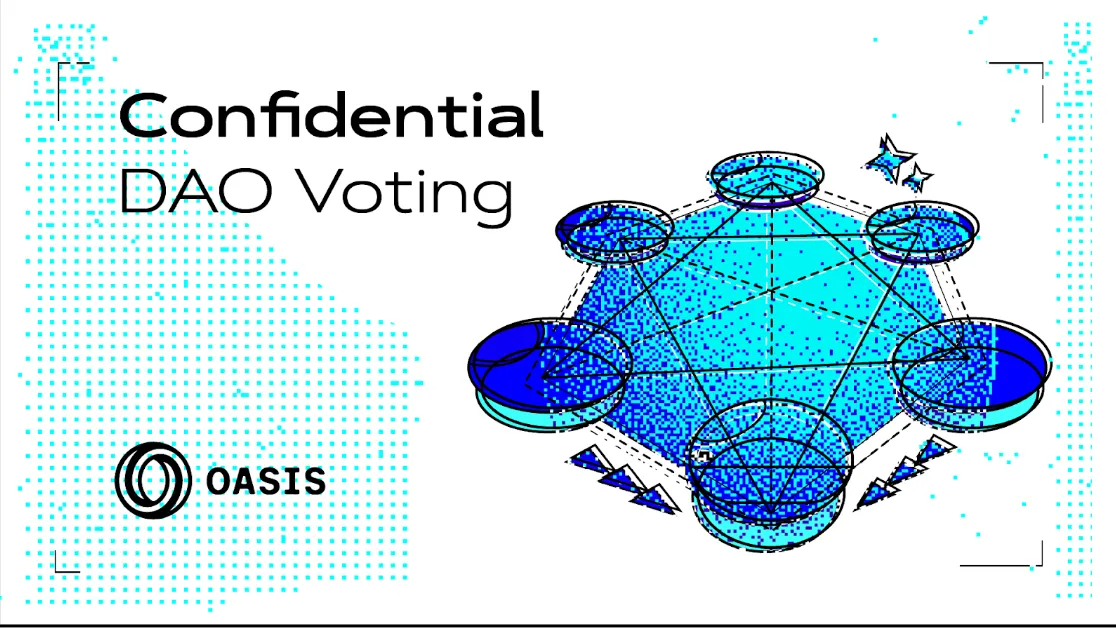
Both approaches enable confidential voting, allowing DAOs to shield voter identities and conceal proposal results. As noted in official documentation from Oasis, privacy-enabled contracts can selectively apply confidentiality to different parts of a governance process, balancing transparency with the need for private deliberation. The decision ultimately rests on which risk profile aligns with your DAO’s governance philosophy.
Use cases for private voting
Public blockchains offer transparency, but that visibility is not always an asset. In many governance scenarios, the act of voting itself carries risk. Confidential DAOs allow members to cast votes that are verified on-chain without revealing who cast them or how they voted. This capability is essential for protecting members from coercion, retaliation, or market manipulation.
The following scenarios illustrate where private voting adds tangible value to decentralized governance.
In traditional organizations, salary data and performance evaluations are strictly confidential. Applying this standard to DAOs is difficult when using public voting mechanisms. If a DAO votes on the compensation of a lead developer or a treasury manager, public voting exposes these figures to competitors and the broader market. Confidential voting allows the community to approve or adjust compensation packages without revealing individual pay rates or specific vote choices, maintaining professional privacy while ensuring democratic oversight.
Treasury management often involves strategic decisions that can impact token price or project direction. Public voting on large grants or investment allocations can lead to front-running, where external actors buy tokens based on the visible intent of the voters. By using confidential voting, a DAO can allocate funds for sensitive initiatives—such as lobbying, legal defense, or strategic partnerships—without signaling its moves to the market before the transaction is finalized.
For many DAO members, participating in governance is a legal gray area or outright prohibited in their home country. Public voting records are immutable and globally accessible, creating a permanent record of participation that can be used by regulators or employers to identify members. Confidential DAOs enable members in restrictive jurisdictions to exercise their governance rights anonymously. This protects them from legal repercussions or professional retaliation while still contributing to the DAO's collective decision-making process.
Regulatory and audit implications
Use this section to make the Confidential DAOs decision easier to compare in real life, not just on paper. Start with the reader's actual constraint, then separate must-have requirements from details that are merely nice to have. A practical choice should survive normal use, maintenance, timing, and budget. If a recommendation only works in an ideal situation, call that out plainly and give the reader a fallback path.
The simplest way to use this section is to write down the must-have criteria first, then compare each option against those criteria before weighing nice-to-have features.
Choose the right privacy model for your DAO
Selecting a privacy model requires matching your organization’s risk profile with its technical capacity. There is no universal standard. The right choice balances regulatory compliance, community trust, and the specific vulnerabilities of your smart contracts.
Assess regulatory exposure
Start by identifying the jurisdictions where your members reside. If your DAO handles sensitive financial data or operates in regulated sectors, full transparency may expose members to legal liability or unwanted attention. Privacy-enabled contracts, such as those on Oasis Sapphire, allow you to shield voter identities and conceal proposal results. This selective confidentiality is often necessary to meet data protection standards without breaking on-chain governance.
Evaluate technical limits to account for
Privacy solutions are not free. Implementing confidential voting or private treasury management requires specific infrastructure, such as Oasis’s Oracle Programming Language (OPL). If your team lacks the expertise to manage these complex stacks, the risk of smart contract vulnerabilities increases. Ensure your development resources can support the chosen privacy layer before committing to the architecture.
Align with community expectations
Governance is only effective if members trust the process. Some communities demand absolute transparency to prevent insider trading or manipulation. Others prefer privacy to protect members from doxxing or harassment. Survey your community to determine if they value anonymity over auditability. A mismatch here can lead to low participation or governance paralysis.
Review your existing smart contracts and governance proposals. Identify which data points are currently exposed and assess the potential harm if that data were leaked or exploited. This baseline audit reveals your immediate privacy needs.
List the legal obligations for your members. Determine if GDPR, CCPA, or financial regulations require data minimization. This step defines the non-negotiable privacy boundaries your DAO must respect.

Choose a privacy layer that fits your technical capacity. Options range from simple pseudonymity to complex zero-knowledge proofs. Ensure your developers can maintain the chosen infrastructure securely.
Test with a pilot program
Before rolling out a new privacy model to the entire DAO, run a pilot program. Use a small, controlled proposal to test the confidentiality features. Monitor for technical glitches, user confusion, or regulatory flags. This low-stakes test allows you to refine the process without risking the entire treasury or reputation.
No comments yet. Be the first to share your thoughts!