Confidential daos 2026 limits to account for
Use this section to make the The DAO Transparency Mandate decision easier to compare in real life, not just on paper. Start with the reader's actual constraint, then separate must-have requirements from details that are merely nice to have. A practical choice should survive normal use, maintenance, timing, and budget. If a recommendation only works in an ideal situation, call that out plainly and give the reader a fallback path.
The simplest way to use this section is to write down the must-have criteria first, then compare each option against those criteria before weighing nice-to-have features.
Confidential daos 2026 choices that change the plan
The Department of Commerce’s Department Administrative Order 216-26, effective June 4, 2026, shifts the burden of proof in statistical disclosure avoidance. For organizations managing decentralized governance or sensitive data aggregation, this mandates a shift from reactive redaction to proactive confidentiality engineering.
Implementing confidential computing is not a binary choice. It requires weighing operational friction against compliance certainty. The following comparison outlines the core tradeoffs you must evaluate before adopting these controls.
| Factor | Traditional Redaction | Confidential Computing | Risk Level |
|---|---|---|---|
| Data Utility | High (raw data accessible) | Moderate (aggregated outputs only) | low |
| Compliance Burden | High (manual review) | Low (automated enforcement) | medium |
| Security Boundary | Perimeter-based | Hardware-enforced (TEE) | high |
| Implementation Cost | Low | High (infrastructure change) | medium |
Traditional redaction relies on human review and static rules. It is cheap to start but expensive to maintain as data volumes grow. Confidential computing moves security into the hardware enclave. This eliminates the need to trust the operating system with sensitive keys, but it requires significant infrastructure changes.
The choice depends on your risk tolerance. If you handle public statistics, the new DAO 216-26 makes traditional methods increasingly untenable. If you manage private DAO treasury decisions, the tradeoff is between speed and irrefutable privacy guarantees.
The landscape is shifting rapidly. Keep an eye on upcoming events like the Confidential Computing Summit and the Privacy Symposium, where these exact tradeoffs are being debated by the architects of the new standards.
Build a compliant DAO governance stack
The Department of Commerce’s Department Administrative Order (DAO) 216-26, effective June 4, 2026, mandates strict disclosure avoidance for statistical data. For decentralized autonomous organizations (DAOs) handling sensitive member or financial data, this creates a new compliance layer. You must now treat data privacy not just as a technical feature, but as a governance requirement.
Confidential computing offers a way to meet these standards without sacrificing transparency. By processing data in encrypted enclaves, DAOs can verify votes and validate transactions without exposing raw inputs. This approach aligns with the new federal expectations for data protection while preserving the core benefits of decentralization.
Follow this framework to integrate these protocols into your existing governance structure.
Identify which on-chain or off-chain data points are considered sensitive under the new order. Look for personally identifiable information (PII) or aggregated financial metrics that could reveal individual member status. Map these data flows against your current smart contract architecture to find exposure points.
Choose hardware-enforced trusted execution environments (TEEs) from reputable providers like Intel SGX, AMD SEV, or ARM CCA. These technologies ensure that data remains encrypted even while being processed. Verify that your chosen provider meets the security standards outlined in DAO 216-26 to ensure your enclave attestation is valid for compliance audits.

Combine confidential computing with zero-knowledge (ZK) proofs to validate governance actions without revealing underlying data. For example, use ZK-SNARKs to prove that a voter has sufficient reputation tokens without disclosing their total balance. This dual-layer approach satisfies both the confidentiality requirements of the new mandate and the transparency needs of your community.
Revise your DAO’s governing documents to explicitly include data protection protocols. Define who is responsible for maintaining the confidentiality of the enclave keys and how data is destroyed after processing. Align these internal rules with the external legal requirements of DAO 216-26 to avoid regulatory penalties.
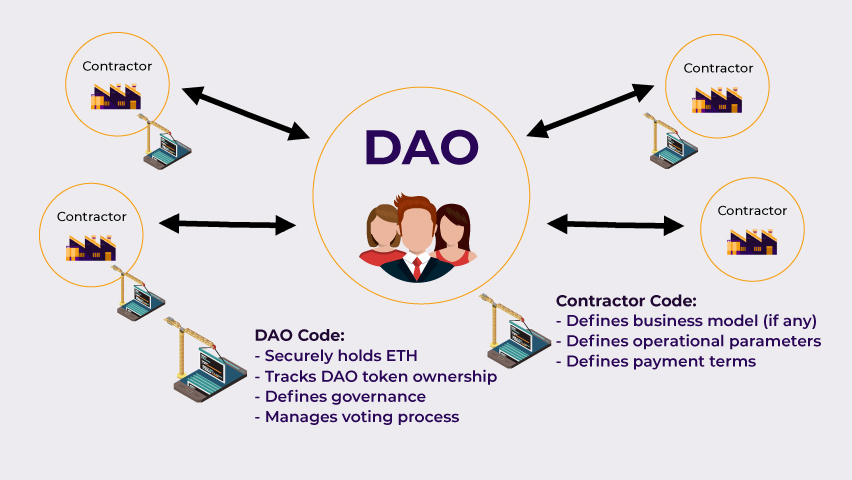
Establish a routine schedule for verifying the integrity of your confidential computing environment. Use remote attestation protocols to confirm that your software has not been tampered with. Document these checks as evidence of compliance, ensuring you can demonstrate adherence to the new disclosure avoidance policy during any external audit.
-
Identified all sensitive data flows
-
Selected TEE provider with valid attestation
-
Integrated ZK proofs for vote validation
-
Updated bylaws with data protection clauses
-
Scheduled first attestation check
Avoid the weak options
Use this section to make the The DAO Transparency Mandate decision easier to compare in real life, not just on paper. Start with the reader's actual constraint, then separate must-have requirements from details that are merely nice to have. A practical choice should survive normal use, maintenance, timing, and budget. If a recommendation only works in an ideal situation, call that out plainly and give the reader a fallback path.
The simplest way to use this section is to write down the must-have criteria first, then compare each option against those criteria before weighing nice-to-have features.
No comments yet. Be the first to share your thoughts!