Decentralized Autonomous Organizations (DAOs) are at the forefront of blockchain governance, but as these communities grow, so do concerns around privacy in decentralized organizations. Traditional on-chain voting methods expose voter identities and choices, making them vulnerable to vote buying, coercion, and herd behavior. The solution? Zero-knowledge proofs (ZKPs), which empower DAOs to verify votes and eligibility without revealing sensitive information. This is more than a technical upgrade, it's a cultural shift toward secure DAO voting protocols that prioritize member confidentiality.
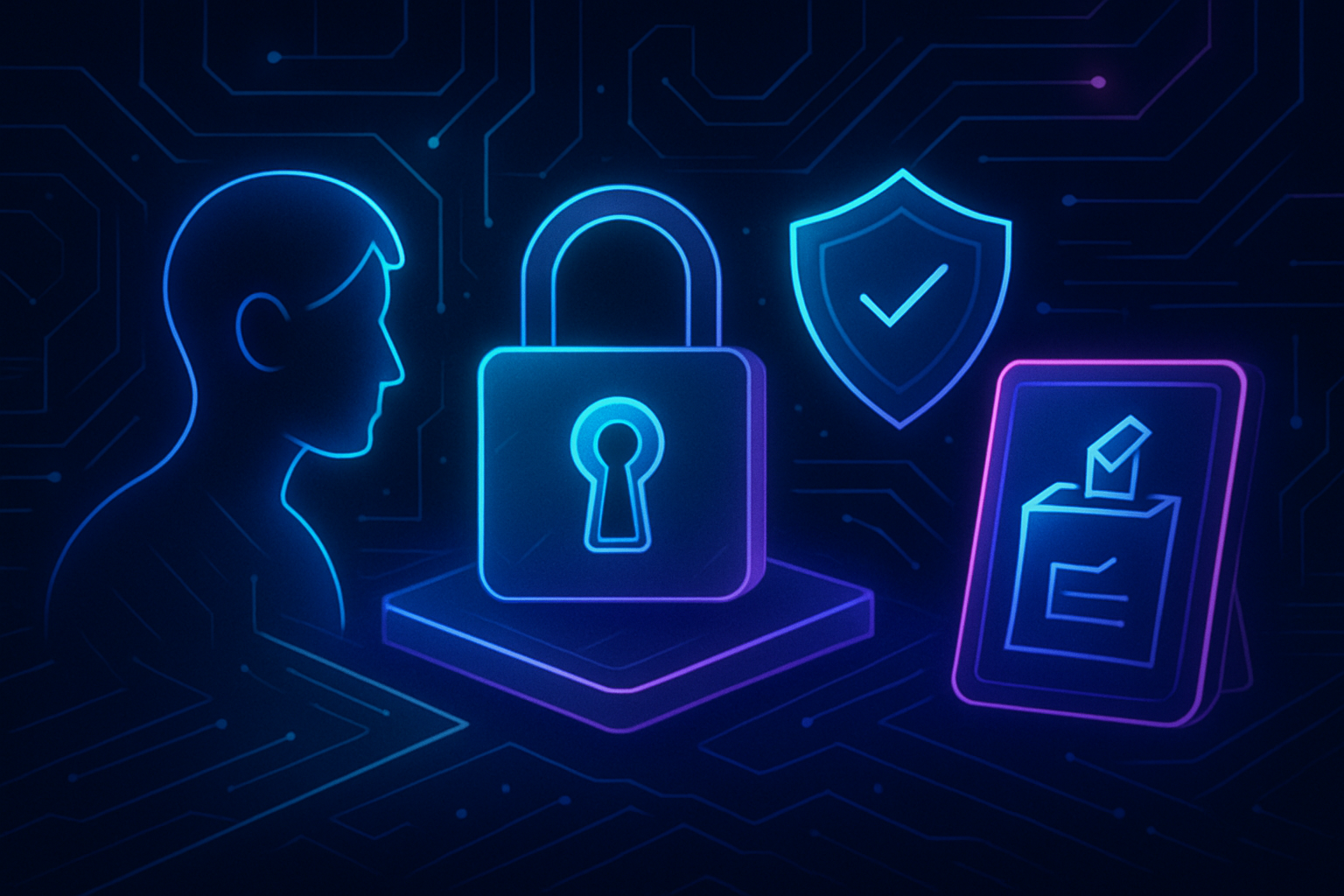
Abstract visualization of zero-knowledge proofs securing confidential DAO voting processes, featuring encrypted ballots and blockchain elements

Why Privacy Matters in DAO Voting

DAOs thrive on the principle of transparency, but blind transparency can lead to manipulation. When every vote is public, powerful actors may coerce or incentivize voters, undermining the democratic ethos. By integrating ZKPs into voting systems, DAOs can guarantee that each member's vote is counted, without exposing who voted for what. This approach not only defends against external threats but also nurtures a culture where members feel safe expressing their true preferences.

For instance, projects like AGYSO ZK-DAO-VOTE are pioneering privacy-preserving voting protocols that combine homomorphic encryption with ZKPs to protect voter privacy while ensuring fairness. Similarly, solutions such as Private Delegate Statements allow delegates to make statements and vote anonymously using ZK verification.

Core Principles of Zero-Knowledge Proofs for DAOs

A robust ZKP-based system for confidential DAO voting must fulfill three criteria:

  • Completeness: Legitimate votes are always accepted by the system.
  • Soundness: Invalid or fraudulent votes are reliably rejected.
  • Zero-Knowledge: No information about the voter's identity or choice is leaked during verification.

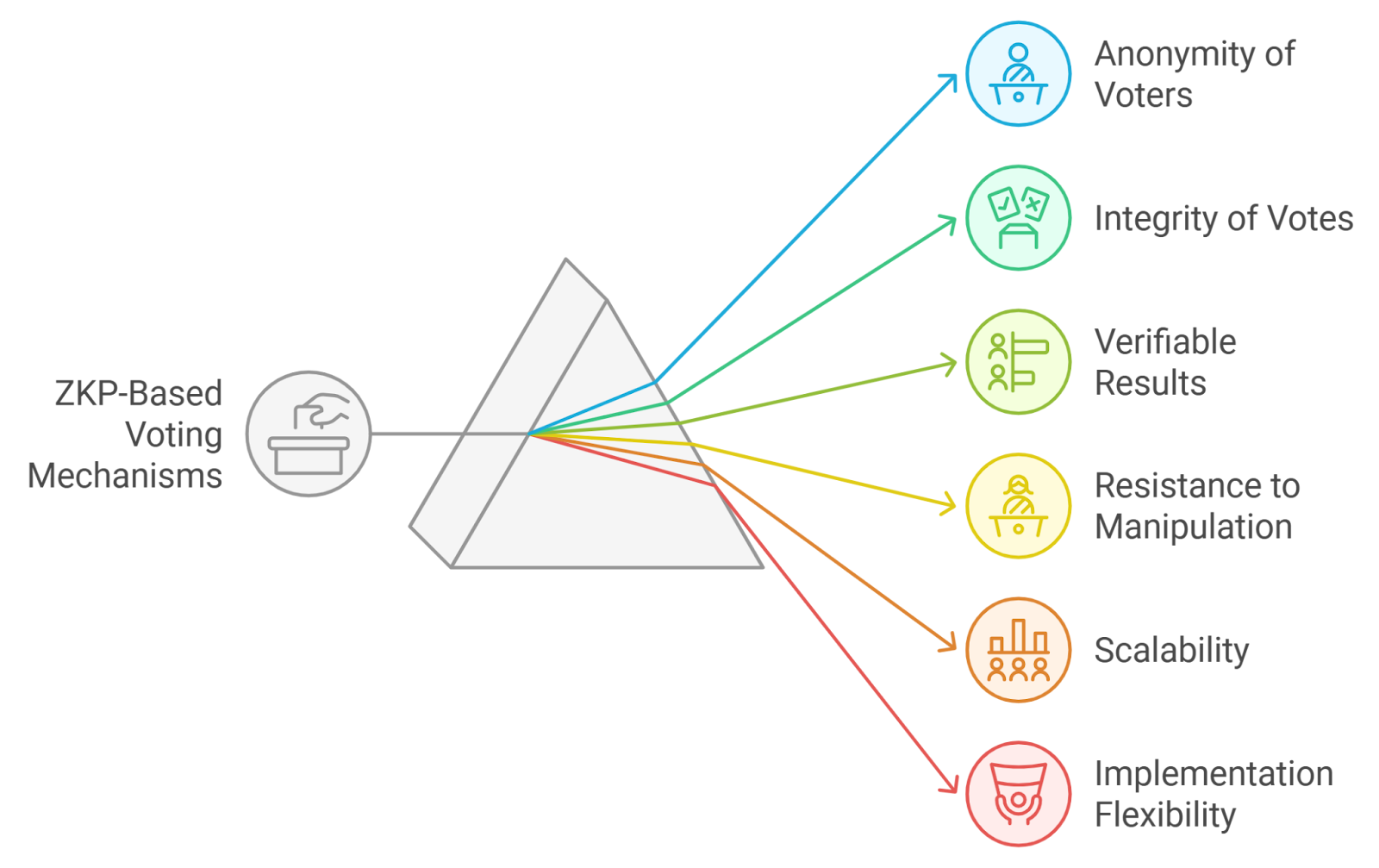
This trifecta ensures trust without sacrificing privacy, a balance long sought by digital governance pioneers. As noted in research from Aragon and o1Labs, these properties make ZKP-powered voting not just private but also tamper-resistant and scalable for large communities.

Zero-Knowledge Proofs in DAO Voting: Your Top Questions Answered

What are zero-knowledge proofs (ZKPs) and why are they important for DAO voting?
Zero-knowledge proofs (ZKPs) are cryptographic techniques that allow someone to prove the validity of a statement without revealing any underlying information. In the context of DAO voting, ZKPs are crucial because they enable members to demonstrate their eligibility and cast votes without exposing their identity or how they voted. This ensures privacy, prevents vote buying or coercion, and upholds the integrity of the voting process.
🔒
How does a ZKP-based confidential voting system work in a DAO?
A ZKP-based confidential voting system typically involves several steps: defining a voting circuit (using tools like Circom), developing smart contracts to manage the process, and integrating ZKP verification to confirm each vote's validity. The system also uses mechanisms like nullifiers to prevent double voting and applies homomorphic encryption or similar methods to tally votes anonymously, ensuring that individual choices remain confidential while the overall result is transparent.
🗳️
Can ZKPs prevent double voting in DAO elections?
Yes, ZKPs can effectively prevent double voting by incorporating unique identifiers or nullifiers within the proof structure. When a member votes, a unique marker is generated and checked by the smart contract. If the same identifier is used again, the vote is rejected. This ensures that each member can only vote once per proposal, maintaining fairness without compromising voter anonymity.
🚫
Are there real-world examples or resources for implementing ZKP-based DAO voting?
Absolutely! Projects like AGYSO ZK-DAO-VOTE and open-source repositories such as [DaoZkProofVoting](https://github.com/ritikbhatt20/DaoZkProofVoting) and [privatevotingdaoaleo](https://github.com/ungaro/privatevotingdaoaleo) provide practical implementations of ZKP-based DAO voting. These resources demonstrate how to combine homomorphic encryption and ZKPs to achieve private, secure, and verifiable voting within decentralized organizations.
📚
How does ZKP-based voting balance privacy and transparency in DAO governance?
ZKP-based voting systems strike a balance between privacy and transparency by allowing votes to be verified and tallied without revealing individual voter identities or choices. While the process ensures that only eligible votes are counted and the final results are accurate, it also protects members from potential threats like voter intimidation or vote buying. This fosters a more democratic and inclusive governance environment for DAOs.
⚖️

The Step-by-Step Process: Implementing Confidential Voting With ZKPs

If you're considering private DAO governance for your community or project treasury, understanding the implementation process is crucial. Here are the foundational steps used by leading protocols:

  1. Define the Voting Circuit: Use a language like Circom to encode rules verifying voter eligibility and vote validity, without revealing personal data.
  2. Create Smart Contracts: Deploy contracts that accept encrypted votes and proofs on-chain while automating tallying and result publication.
  3. ZKP Verification: Integrate on-chain mechanisms to check each proof before counting a vote, ensuring only eligible participation without identity leaks.
  4. Avoid Double Voting: Utilize nullifiers or unique identifiers within proofs so each member can only cast one valid vote per proposal.
  5. Tally Anonymously: Aggregate results using homomorphic encryption or similar cryptographic tools so individual choices remain hidden even during final tallying.

This workflow forms the backbone of modern confidential DAO voting systems such as those found at Dao_Zk_Proof_Voting, where optional privacy layers can be configured based on your community's needs.

Implementing zero-knowledge proofs in DAO voting isn’t just about deploying new code - it’s about fostering trust, inclusivity, and resilience in decentralized communities. As more DAOs recognize the risks of public voting records, the demand for private DAO governance tools is accelerating. Projects like private_voting_dao_aleo exemplify how open-source innovation is making privacy-first voting accessible to any organization, regardless of size or technical expertise.

Security remains paramount throughout this process. When properly implemented, ZKP-based voting protocols prevent common threats like vote buying and double-voting while allowing for transparent auditability of the overall result. The use of nullifiers ensures that each member can only participate once per proposal, without linking their action to their identity. Meanwhile, homomorphic encryption means that even when votes are tallied, no one can reverse-engineer individual choices, a critical feature for DAOs handling sensitive decisions or large treasuries.

Real-World Applications and Case Studies

The shift toward confidential DAO voting is already underway in leading ecosystems:

  • MACI (Minimal Anti-Collusion Infrastructure): Used by several Ethereum-based DAOs to encrypt votes and verify results with ZKPs, no outside party can read the votes.
  • AGYSO ZK-DAO-VOTE: Combines homomorphic encryption with zero-knowledge proofs to create a tamper-resistant and private voting experience for DAOs.
  • Private Delegate Statements: Enables delegates to express views and participate anonymously while still proving legitimacy via cryptographic proofs.

This wave of adoption proves that privacy and transparency are not mutually exclusive in decentralized governance. With the right architecture, DAOs can achieve both, preserving democratic values while shielding members from undue influence.

Zero-Knowledge Proofs & Confidential DAO Voting: Your Top Questions Answered

What are zero-knowledge proofs and how do they enhance privacy in DAO voting?
Zero-knowledge proofs (ZKPs) are cryptographic techniques that allow someone to prove they know a piece of information without revealing the information itself. In the context of DAO voting, ZKPs enable members to verify their eligibility and cast votes without exposing their identities or choices. This approach safeguards against vote buying, coercion, and herd mentality, ensuring a more confidential and democratic governance process.
🔒
How is double voting prevented when using zero-knowledge proofs in DAO voting systems?
To prevent double voting, ZKP-based DAO voting systems use mechanisms like nullifiers or unique identifiers within the proof framework. Each voter generates a unique cryptographic marker when submitting their vote. Smart contracts check these markers to ensure that each member can only cast one vote per proposal, all without revealing who voted or what their choice was.
🚫
Can vote results still be verified as accurate if individual votes remain confidential?
Yes! Zero-knowledge proofs allow for the verification of vote validity and eligibility without disclosing individual votes. The system can publicly prove that all counted votes are legitimate and that the tally is correct, thanks to cryptographic guarantees. This ensures both the integrity of the result and the privacy of each voter's choice, balancing transparency and confidentiality.
What technologies or tools are commonly used to implement ZKP-based confidential voting in DAOs?
Commonly used technologies include ZKP languages like Circom for defining voting circuits, and blockchain-based smart contracts to manage the voting process. Projects such as [AGYSO ZK-DAO-VOTE](https://devfolio.co/projects/agyso-zkdaovote-bc39) and open-source repositories like [DaoZkProofVoting](https://github.com/ritikbhatt20/DaoZkProofVoting) provide practical frameworks. These tools help ensure that only eligible votes are counted while maintaining voter privacy.
🛠️
How does anonymous vote tallying work in confidential DAO voting?
Anonymous vote tallying is achieved through techniques like homomorphic encryption, which allows votes to be aggregated without decrypting individual ballots. The final result can be computed and verified without exposing how any individual voted. This preserves overall confidentiality while still enabling a transparent, auditable outcome for the DAO community.
🗳️

Best Practices for Secure DAO Voting Protocols

If you’re ready to implement confidential DAO voting using ZKPs, keep these best practices in mind:

  • Audit your smart contracts: Third-party audits help uncover vulnerabilities before they impact your governance process.
  • Select proven libraries: Use well-maintained ZKP toolkits like Circom or SnarkJS to minimize implementation risk.
  • Pilot with testnets: Run trial votes on test networks before moving real proposals on-chain, this helps surface usability issues early.
  • Educate your community: Share documentation and run workshops so all members understand how privacy-preserving voting works and why it matters.
  • Stay updated: The field of cryptographic governance evolves rapidly, track advancements through repositories like those listed above or via research from leading projects such as Aragon and o1Labs.

Confidential DAO Voting & Zero-Knowledge Proofs: Your Top Questions Answered

What are zero-knowledge proofs and how do they enhance privacy in DAO voting?
Zero-knowledge proofs (ZKPs) are cryptographic methods that enable someone to prove they know a piece of information (like a vote) without revealing the information itself. In DAO voting, ZKPs allow members to verify their eligibility and cast votes without exposing their identity or voting choice. This ensures that voting remains confidential, reducing risks like vote buying, coercion, or herd mentality, while still maintaining the integrity and fairness of the process.
🔒
How does a ZKP-based confidential DAO voting system prevent double voting?
A ZKP-based voting system typically uses nullifiers or unique identifiers embedded within the zero-knowledge proof. When a member submits a vote, the system checks if the nullifier has already been used. If so, the vote is rejected. This mechanism ensures that each eligible member can only vote once per proposal, without revealing who voted or what their choices were, thereby preserving both security and privacy.
🛡️
What technologies are commonly used to implement confidential DAO voting with ZKPs?
Confidential DAO voting systems often leverage tools like Circom (for creating ZKP circuits), smart contracts (usually on Ethereum or similar blockchains), and cryptographic techniques such as homomorphic encryption. These components work together to verify vote validity, manage vote submissions, and tally results without exposing individual voter data. Open-source projects like AGYSO ZK-DAO-VOTE and various GitHub repositories provide practical frameworks for these implementations.
🧩
Can vote results still be verified as accurate if the votes themselves remain private?
Yes, zero-knowledge proofs guarantee the correctness of the voting process. With ZKPs, the system can mathematically prove that all votes counted are valid and come from eligible members, without revealing any individual choices. This means the community can trust the final results, even though the contents of each vote remain confidential. This approach balances transparency in outcomes with privacy for voters.
Are there real-world examples or resources for implementing ZKP-based DAO voting?
Absolutely! Several open-source projects and protocols demonstrate how to implement ZKP-based confidential voting in DAOs. For instance, AGYSO ZK-DAO-VOTE combines homomorphic encryption and ZKPs for privacy-preserving voting. GitHub repositories like [DaoZkProofVoting](https://github.com/ritikbhatt20/DaoZkProofVoting) and [privatevotingdaoaleo](https://github.com/ungaro/privatevotingdaoaleo) offer code and documentation for developers looking to build or experiment with these systems.
📚

A Path Forward: Privacy as a Governance Standard

The integration of zero-knowledge proofs into DAO infrastructure signals a maturation of decentralized governance. As regulatory scrutiny intensifies and communities demand stronger privacy guarantees, these protocols offer a pragmatic path forward, one where participation is both meaningful and shielded from exploitation. By adopting secure DAO voting protocols today, organizations position themselves at the forefront of ethical blockchain leadership.

If you want a deeper dive into implementation details or case studies, explore open-source projects such as Dao_Zk_Proof_Voting, or review live deployments like AGYSO ZK-DAO-VOTE. These resources provide hands-on examples for developers looking to bring privacy-first governance to their own communities.