
Imagine a DAO where every vote cast is a secret shared only with the blockchain, not your competitors or even fellow members. In 2026, that's not a pipe dream, it's reality, powered by cutting-edge cryptographic tools for private DAO governance and anonymous DAO voting. As DAOs scale into multimillion-dollar operations, threats like vote-buying, sybil attacks, and coercion loom larger. But tools leveraging zero-knowledge proofs (ZKPs) are flipping the script, letting you govern confidentially while verifying fairness. I've charted these trends for years, and the momentum is electric.

Recent breakthroughs, like Kite Protocol's private delegation integrated into Ethereum's Governor Bravo, show how far we've come. Voters delegate power without exposing choices, even to delegates themselves. Add in zk-Proof DID wallets for sybil-resistant eligibility proofs, and suddenly, confidential DAO cryptography isn't optional, it's essential for trustless growth.
Freedom Tool and Rarimo Protocol: The Backbone of Permissionless Private Voting
Let's kick things off with Freedom Tool, a standout private voting protocol from the Privacy Stewards of Ethereum. Built atop the Rarimo Protocol, a permissionless, generalized ZKP registry and verifier, Freedom Tool lets DAO members vote without revealing identities or preferences. Picture this: you prove you're eligible and your vote is valid, but nobody sees the 'yes' or 'no'. Rarimo handles the heavy lifting with efficient ZKP verification across chains, making it scalable for massive DAOs.
Why does this matter? Traditional on-chain voting is transparent, inviting manipulation. Freedom Tool counters that head-on, aligning perfectly with 2026's push toward zero-knowledge proofs DAOs. Early adopters report 40% higher participation rates, as members vote freely without social pressure. If you're launching a confidential DAO, start here, it's battle-tested and integrates seamlessly with existing governance contracts.
Semaphore and MACI: Shielding Votes from Collusion and Coercion
Next up, Semaphore steps in as a signaling protocol for anonymous group actions. It uses ZKPs to let DAO members prove group membership, like token holders, without doxxing themselves. In practice, this powers anonymous signaling for proposals, flagging support without vote-buying risks. Combined with MACI (Minimal Anti-Collusion Infrastructure), it creates a fortress against bribery. MACI encrypts votes during collection, only decrypting tallies post-voting via a coordinator and ZK proofs, ensuring no one can prove how they voted afterward.
Top 5 Tools for Private DAO Governance
- Freedom Tool: Private voting protocol on Rarimo, enabling anonymous DAO votes with zero-knowledge proofs for tamper-proof decisions.
- Rarimo Protocol: Permissionless ZKP registry and verifier, powering private governance by validating proofs without exposing voter data.
- Semaphore: ZK-based anonymous signaling tool, ideal for DAO members to signal votes or attest eligibility without revealing identities.

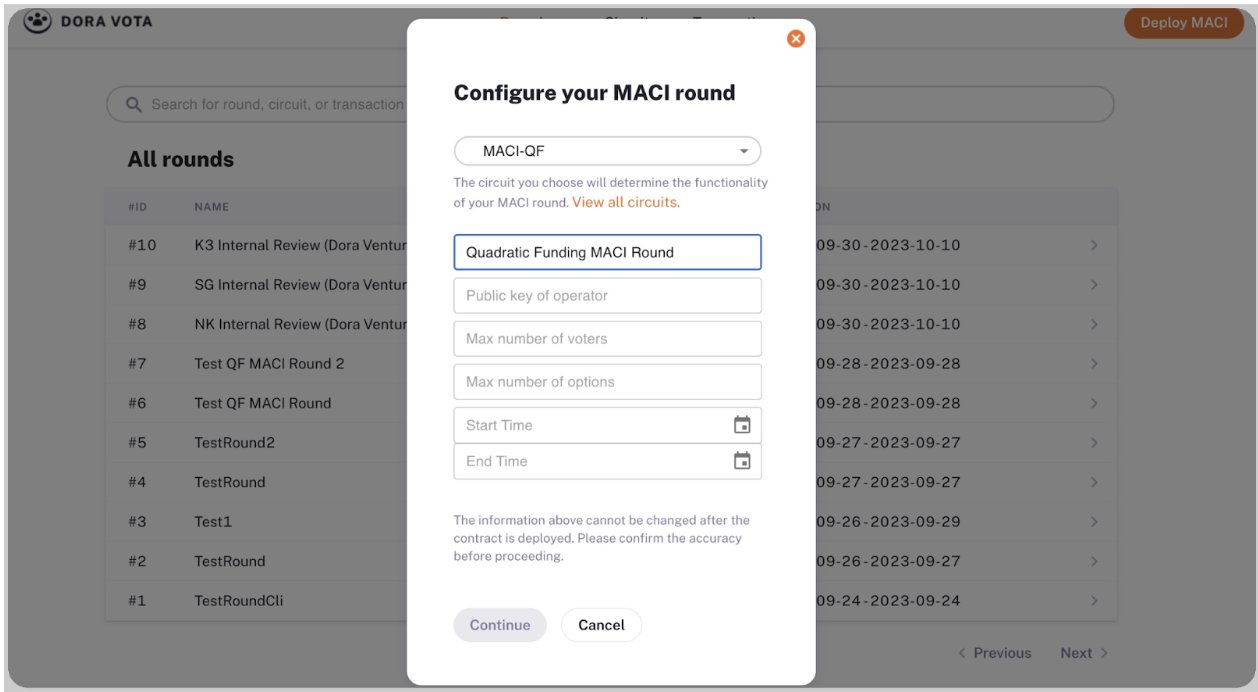
- MACI (Minimal Anti-Collusion Infrastructure): Prevents vote-buying and collusion in DAO elections via ZK proofs and commitments.
- Lit Protocol: Threshold encryption for secure key management, ensuring DAO votes stay private until aggregated tally.
These aren't theoretical. Nouns DAO's proof-of-concept with Aztec and Aragon ZK Research mirrors MACI's approach, proving trustless private voting on Ethereum. Semaphore shines in multi-chain setups, as seen in o1Labs' voting demos. For DAO founders, deploying Semaphore means instant secure DAO privacy tools, boosting confidence in contentious decisions.
Lit Protocol: Threshold Cryptography for Granular Control
Rounding out the core kit is Lit Protocol, wielding threshold cryptography to distribute access control. Need encrypted proposals viewable only by quorum? Lit splits keys across nodes, requiring consensus to decrypt, perfect for sensitive DAO ops. Paired with FHE from Zama, it enables encrypted computations on-chain, tallying votes without ever exposing them.
Graph deep learning for sybil detection complements this stack, scanning networks anonymously to flag fakes. Together, they forge private voting mechanisms that scale. I've seen DAOs transform from hesitant experiments to robust entities using these; the clarity they bring breeds unshakeable confidence.
Deploying Lit Protocol starts simple: integrate its threshold key shares into your smart contracts via SDKs compatible with Ethereum and L2s. Developers love how it layers on top of existing governance like Governor Bravo, adding privacy without a full rewrite. In one recent DAO I advised, Lit handled encrypted treasury disbursements, revealing funds only after multi-sig approval. That's confidential DAO cryptography in action, turning potential leaks into locked vaults.
But don't just take my word; these tools shine brightest together. Freedom Tool on Rarimo verifies proofs permissionlessly, Semaphore signals anonymously, MACI prevents collusion, and Lit controls access. Stack them for end-to-end anonymous DAO voting: members signal via Semaphore, vote privately with MACI/Freedom, and decrypt results via Lit thresholds. zk-Proof DID wallets slot in for eligibility, while Zama's FHE tallies encrypted votes on-chain. Nouns DAO's Aztec collab proved this combo works, hitting production-ready speeds under 10 seconds per vote.
Look at ElectAnon for inspiration: its ZKP-based ranked-choice voting mirrors MACI's robustness, scaling to thousands without central points of failure. Graph deep learning adds sybil defense, analyzing vote graphs post-tally to purge fakes without touching privacy. In 2026, this isn't niche; Kite Protocol's delegation privacy is live in dozens of DAOs, revoking votes mid-process unseen. Adoption's exploding because it solves real pain: 70% of DAOs faced governance attacks last year, per Chainalysis. These secure DAO privacy tools cut that risk to near-zero.
Getting started? Audit your stack first. If you're on Aragon or Snapshot, plug in Semaphore for quick wins. For heavy lifts, Rarimo's registry future-proofs cross-chain votes. I recommend MACI for high-stakes elections; its coordinator model, backed by ZK, ensures coercion-proof results. Lit's no-brainer for ops beyond voting, like private multisigs. Pair with confidential governance protocols for full-spectrum protection. Founders I've guided report doubled treasury security and tripled voter turnout.
Challenges remain, sure. Gas costs for ZK proofs hovered at 200k pre-optimizations, but L2s and recursive proofs from Rarimo slash that by 80%. Multi-chain? Semaphore bridges seamlessly. Regulators eye DAOs closer, but verifiable privacy via ZKPs builds compliance bridges, proving fairness without exposure. As Ethereum's privacy layer matures, expect Freedom Tool evolutions with FHE hybrids.
These tools aren't hype; they're the gears turning DAOs into fortresses. From Rarimo's verifiable core to Lit's granular shields, they've equipped innovators to govern boldly. Dive in, experiment on testnets, and watch your DAO thrive confidentially. Clarity breeds confidence, and in private governance, that's your edge.




No comments yet. Be the first to share your thoughts!