2026 regulatory shift for private governance
The year 2026 represents a structural inflection point for decentralized autonomous organizations operating in privacy-preserving modes. For the first time, the European Union’s Markets in Crypto-Assets (MiCA) regulation has fully crystallized into enforceable compliance frameworks, directly impacting how DAOs manage real-world asset (RWA) tokenization and governance transparency.
Confidential DAOs have historically relied on zero-knowledge proofs (ZKPs) to shield transaction details and voter intent. However, MiCA’s strict requirements for issuer transparency and investor protection create a friction point. Regulators demand visibility into the underlying assets and governance participation to prevent market abuse, while DAO participants seek cryptographic guarantees that their data remains private.
This tension is not merely technical but jurisdictional. As of January 2026, the 56th Annual Meeting of the World Economic Forum in Davos highlighted growing institutional pressure for standardized digital asset reporting. Global leaders are pushing for interoperable compliance standards that do not compromise data sovereignty, signaling that "privacy by default" is no longer a viable strategy for RWA-heavy DAOs.
The shift requires a new architectural approach. DAOs can no longer treat privacy and compliance as separate layers. Instead, they must integrate selective disclosure mechanisms that satisfy MiCA’s transparency mandates without exposing the entire governance ledger. This balance defines the operational reality for confidential DAOs in 2026.
MiCA compliance requirements for anonymous entities
The Markets in Crypto-Assets (MiCA) regulation, which entered into full force in the European Union on December 30, 2024, creates a direct conflict with the pseudonymous nature of many decentralized autonomous organizations (DAOs). While the framework aims to protect investors and ensure market integrity, it relies on a traditional financial model where every participant can be identified. For DAOs operating without a legal wrapper, this requirement to disclose identity is often impossible to fulfill.
MiCA mandates strict Know Your Customer (KYC) and Anti-Money Laundering (AML) procedures for crypto-asset service providers. These rules require entities to verify the identity of their customers and, increasingly, the beneficial owners behind those customers. In a DAO structure, governance is typically executed through on-chain voting by token holders. These holders often interact with the network using pseudonymous wallet addresses rather than verified legal identities. This anonymity makes it difficult for the DAO to satisfy the "customer due diligence" obligations required by EU law.
The challenge extends beyond simple user verification. Regulators are beginning to look at the governance layer itself. If a DAO is deemed to be providing regulated services, the individuals controlling the governance parameters may be viewed as responsible parties. Without a clear legal entity to hold liability, identifying who is "in control" becomes a complex forensic exercise. This creates a compliance gap where the technology enables anonymity, but the regulation demands transparency.
This tension is not just theoretical. As MiCA enforcement actions begin to roll out in 2026, DAOs that cannot prove the identity of their key participants or beneficial owners face significant regulatory risk. The lack of a clear legal persona means that anonymous governance structures may find themselves outside the boundaries of compliant operation within the EU market.
Zero-knowledge proofs as a compliance tool
Confidential DAOs face a fundamental tension: regulators demand transparency, while members demand privacy. Zero-knowledge proofs (ZKPs) resolve this by allowing a DAO to cryptographically prove it meets regulatory standards without exposing the underlying data. Instead of publishing member identities or transaction histories on-chain, the DAO publishes a mathematical proof that verifies compliance.
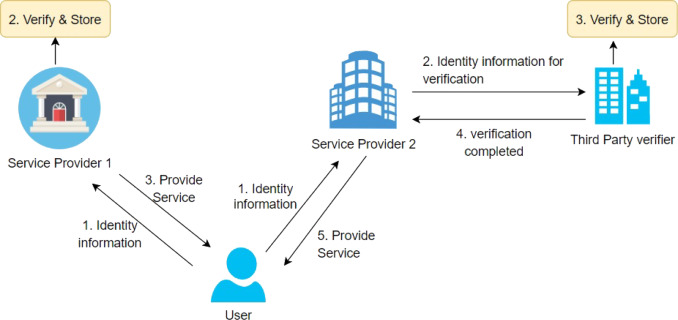
This technology is critical for navigating the EU’s Markets in Crypto-Assets (MiCA) regulation. MiCA requires strict adherence to Anti-Money Laundering (AML) and Know Your Customer (KYC) rules. A ZKP-enabled DAO can generate a proof that confirms every participant is KYC-verified and that no transactions involve sanctioned addresses, all while keeping individual wallets and identities hidden from the public ledger.
The mechanism works by splitting data into two parts: the private input (held by the user) and the public statement (verified by the network). For example, a user can prove they are over 18 or reside in an approved jurisdiction without revealing their date of birth or home address. The smart contract only checks the validity of the proof, not the data itself.
Technical prerequisites for ZK-compliance
Implementing ZK-compliance layers requires specific infrastructure to manage proofs and verifiers securely.
- Verifier Contract Deployment: Deploy a lightweight smart contract on-chain capable of verifying ZK proofs (e.g., using Groth16 or Plonk circuits). This contract acts as the gatekeeper for compliant actions.
- Key Management Systems: Establish secure key generation ceremonies (trusted setups) to create proving and verifying keys. These keys must be stored in hardware security modules (HSMs) or multi-signature wallets to prevent compromise.
- Identity Provider Integration: Connect ZK-circuits to trusted identity providers (Issuers) that issue ZK-credentials. These providers verify user identity off-chain and issue signed proofs that the DAO can validate.
- Proof Aggregation Layer: Implement a recursion layer or aggregator to batch multiple individual proofs into a single on-chain verification. This reduces gas costs and improves scalability for high-volume DAO transactions.
- Compliance Circuit Design: Develop custom zero-knowledge circuits that encode specific regulatory rules (e.g., MiCA AML checks). These circuits must be audited to ensure they correctly reject non-compliant inputs without leaking information.
Balancing public records and private transactions
Tokenizing real-world assets (RWA) creates a fundamental tension for DAOs: legal ownership requires public, immutable registries, while privacy-preserving transactions demand secrecy. This conflict is most acute under the Markets in Crypto-Assets Regulation (MiCA), which mandates transparency for asset-backed tokens. DAOs managing physical collateral—such as real estate, commodities, or private equity—must navigate a landscape where the "who" and "what" are visible, but the "how much" and "when" can remain obscured.
The transparency paradox
Under MiCA, issuers of asset-referenced tokens must disclose the identity of the issuer and the nature of the underlying assets. This public ledger requirement ensures regulatory oversight and investor protection. However, DAO members often seek privacy for their investment decisions to avoid market signaling or competitive intelligence leaks. The challenge lies in structuring the DAO’s operations so that the token’s legal backing is verifiable on-chain, while the individual member’s holdings and trading activity remain confidential off-chain or via zero-knowledge proofs.
Jurisdictional friction
Different jurisdictions treat RWA tokenization differently. The European Union’s MiCA framework provides a unified rulebook, emphasizing transparency. In contrast, other regions may lack clear guidelines or impose stricter data localization laws. DAOs operating globally must decide whether to anchor their legal entity in a jurisdiction with clear RWA rules or adopt a multi-jurisdictional structure that complicates compliance. This decision impacts how data is stored and who has access to it.
Practical compliance steps
- Separate legal and operational layers. Keep the legal ownership of the physical asset in a traditional legal entity (e.g., a LLC or foundation) and issue tokens representing shares or rights to that entity. This keeps the physical asset’s title in a familiar legal framework while the tokens trade on-chain.
- Use privacy-preserving technologies. Implement zero-knowledge proofs (ZKPs) to verify compliance without revealing transaction details. For example, a DAO can prove that a member holds a valid token without disclosing the member’s identity or the token’s value to the public ledger.
- Clarify data retention policies. Define how long transaction data is kept and who can access it. Align these policies with GDPR or other relevant privacy laws to avoid penalties.
The path forward
As RWA tokenization matures, the industry is developing standards to balance transparency and privacy. DAOs must stay ahead of regulatory changes, particularly in the EU, where MiCA enforcement will intensify in 2026. By structuring their operations carefully and leveraging privacy-enhancing technologies, DAOs can manage real-world assets without compromising on regulatory compliance or member privacy.
2026 Regulatory Timeline for Confidential DAOs
Confidential DAOs operate in a window where privacy tools meet public accountability. The following milestones mark the critical dates for MiCA enforcement, privacy law updates, and industry summits in 2026.

The EU’s Markets in Crypto-Assets regulation enters full enforcement for existing service providers. Confidential DAOs offering staking or custody must finalize their compliance frameworks or face suspension. This deadline applies to all entities operating within the European Economic Area.

Global regulators and central bank officials gathered to discuss AI-driven financial risks. While not a legal milestone, the conference signaled a shift toward stricter data sovereignty standards for decentralized infrastructure, impacting how confidential computing solutions are perceived by traditional finance.
The European Data Protection Board released updated guidance on pseudonymization techniques. This directly affects confidential DAOs using zero-knowledge proofs, clarifying that certain privacy-preserving methods may still require explicit consent mechanisms under the General Data Protection Regulation.

Held in San Francisco, this summit brought together enterprise leaders to discuss secure AI deployment. Keynotes on agentic security highlighted the technical barriers to regulatory compliance in confidential environments, providing a roadmap for developers building compliant DAO infrastructure.
The Financial Action Task Force is expected to expand its Travel Rule recommendations to cover decentralized autonomous organizations. This update will likely require confidential DAOs to implement identity verification layers that do not compromise the core privacy of their transactional data.
The annual Privacy Symposium will focus on the intersection of data governance and regulatory compliance. Industry experts will present case studies on how confidential computing can satisfy audit requirements without exposing sensitive user data, shaping the next phase of legal standards.
No comments yet. Be the first to share your thoughts!