Defining confidential DAO structures
A confidential DAO is a decentralized autonomous organization that uses cryptographic tools to hide the identity of voters and the details of proposals from the public blockchain ledger. Traditional DAOs operate on transparent ledgers, which means every vote and treasury movement is visible to anyone. This transparency can create bias, coercion, or retaliation against members who disagree with the majority. Confidential DAOs solve this by allowing the network to verify that a vote is valid without revealing who cast it or how it was cast.
The primary technology enabling this privacy is zero-knowledge proofs (ZKPs). ZKPs allow a participant to prove they are eligible to vote and that their vote is counted correctly, without exposing their personal data or voting choice to the public. This ensures compliance with governance rules while maintaining member privacy. Some implementations also use Trusted Execution Environments (TEEs), which are secure hardware areas that process data in isolation, further shielding sensitive information from the broader network.
Oasis Protocol’s Sapphire network is a key example of this approach. Sapphire is a parallel EVM-compatible chain designed specifically for confidential smart contracts. It allows DAOs to deploy governance contracts where voter identities and proposal details remain encrypted. This structure enables flexible privacy settings, such as revealing results only after a vote closes or sharing data with specific auditors. By keeping vote casting private, these systems aim to reduce groupthink and encourage more honest governance participation.
ZK-proofs for regulatory compliance
Zero-knowledge proofs (ZKPs) allow decentralized autonomous organizations to verify that members meet specific criteria without revealing the underlying data. This technology resolves a fundamental conflict in blockchain governance: the tension between the public, immutable nature of ledgers and the data protection requirements of laws like the General Data Protection Regulation (GDPR).
In traditional systems, verifying a user’s identity or voting rights often requires exposing personal information to the entire network. ZKPs change this dynamic by enabling a "proof of knowledge" without revealing the knowledge itself. A DAO can cryptographically confirm that a participant is KYC-compliant or eligible to vote without ever publishing their name, address, or government ID on-chain.
The Oasis Protocol provides a concrete example of this application. Their Confidential DAO framework uses privacy-enabled smart contracts to shield voter identities and conceal proposal results. By integrating ZKP technology, the protocol allows DAOs to selectively apply confidentiality, ensuring that regulatory checks are satisfied while keeping member data private. This approach helps organizations navigate compliance obligations that would otherwise be incompatible with public blockchain transparency.
Where confidential DAOs add value
Confidential DAOs address specific governance friction points that public blockchains cannot resolve alone. By using zero-knowledge proofs and trusted execution environments, these systems allow participants to prove eligibility or vote correctness without revealing their identity or choice on the public ledger. This technical layer enables use cases where transparency is a liability rather than a feature.
Preventing vote buying and coercion
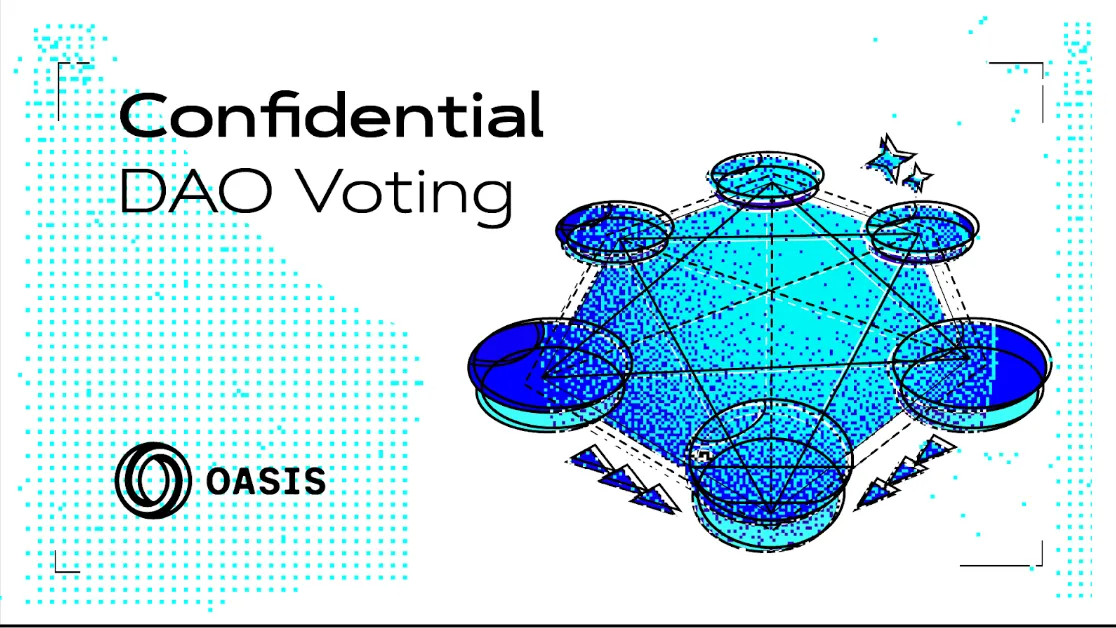
Public voting records create a permanent, verifiable trail that can be exploited for vote buying or coercion. In a standard DAO, a voter’s choice is visible to anyone, making it easy for bad actors to verify compliance with illicit agreements. Confidential governance breaks this link. The Oasis Protocol, for example, uses its Sapphire sidechain to enable confidential voting. Voters can submit encrypted ballots that are tallied without exposing individual choices, effectively neutralizing the economic incentives for vote buying.
Protecting whistleblower identities
Internal governance often requires reporting misconduct or security vulnerabilities. In transparent DAOs, whistleblowers risk retaliation if their identity is linked to their on-chain activity. Confidential DAOs allow members to submit reports or votes anonymously while still proving they are legitimate community members. This protection encourages healthier internal oversight and reduces the risk of silencing critical feedback through on-chain doxxing.
Enabling institutional participation
Many institutional investors are barred from participating in public DAOs due to regulatory compliance or internal risk policies. Publicly revealing large holdings or voting patterns can trigger market-moving disclosures or violate non-disclosure agreements. Confidential governance allows institutions to participate in treasury management and protocol upgrades without exposing their positions. By keeping transaction data and voting records private, these systems lower the barrier to entry for traditional finance entities that require strict privacy controls.
Technical architecture and risks
Confidential DAOs rely on specialized infrastructure to reconcile on-chain transparency with off-chain privacy. The primary technical approach involves Trusted Execution Environments (TEEs) and zero-knowledge (ZK) proof systems. TEEs, such as those offered by Oasis Sapphire, create isolated hardware enclaves where sensitive data can be processed without exposing it to the broader network. This allows member identities and voting details to remain confidential while still producing verifiable proofs that the rules of the organization were followed.
Zero-knowledge circuits enable the network to validate transactions without revealing the underlying data. For example, a confidential DAO can prove that a vote was cast by a valid member without disclosing who cast it or how they voted. This cryptographic separation is essential for compliance with data protection regulations like the GDPR, which may conflict with the immutable nature of public blockchains. The architecture ensures that only authorized parties can access the plaintext data within the enclave, while the rest of the network sees only encrypted hashes or zero-knowledge proofs.
However, this model introduces specific security risks that legal and technical teams must evaluate. The security of TEE-based solutions depends heavily on the trust placed in the hardware manufacturer. If a vulnerability is discovered in the CPU or firmware, the integrity of the entire enclave could be compromised. Additionally, the complexity of ZK circuit implementations creates a large attack surface for potential bugs. A flaw in the circuit logic could allow malicious actors to generate invalid proofs, undermining the confidentiality and integrity of the DAO’s operations.
The reliance on hardware trust also means that these systems are not fully decentralized in the traditional sense. Users must trust that the hardware vendor has not introduced backdoors or that the remote attestation process is secure. As the technology matures, these risks are being mitigated through multi-party computation and improved auditing standards, but the current landscape requires careful due diligence. Organizations adopting confidential DAO structures must balance the benefits of privacy against the inherent dependencies on third-party hardware and complex cryptographic implementations.
Compliance checklist for DAO operators
Confidential DAOs introduce a layer of complexity to regulatory adherence. While privacy tools obscure transaction details, they do not exempt operators from legal obligations. The following steps outline the primary areas requiring attention when deploying confidential structures.
Review local regulations regarding data privacy and financial reporting. Jurisdictions vary significantly in how they treat anonymous or pseudonymous entities. Ensure that the chosen legal wrapper aligns with both transparency requirements and privacy goals.
Verify the technical integrity of zero-knowledge proofs or trusted execution environments. Platforms like Oasis Protocol offer confidential smart contracts, but their security depends on rigorous code audits. Independent verification ensures that privacy mechanisms function as intended without creating exploitable gaps.
Establish clear rules for how long off-chain data or metadata is stored. Even with on-chain privacy, auxiliary data can compromise anonymity. Retention policies should minimize exposure while satisfying necessary record-keeping obligations.
Frequently Asked Questions on DAO Privacy
This section addresses common queries regarding decentralized autonomous organizations, focusing on security, definition, and real-world applications. The information provided is for educational purposes and does not constitute legal advice.
No comments yet. Be the first to share your thoughts!