The SEC enforcement shift in 2026
The regulatory environment for Decentralized Autonomous Organizations (DAOs) has moved from ambiguous silence to targeted, high-stakes enforcement. In 2026, the Securities and Exchange Commission (SEC) has largely abandoned the "wait and see" approach of previous years. Instead, the agency is applying traditional securities laws to on-chain governance structures with increasing rigor, particularly when those structures involve tokenized assets or yield-generating mechanisms.
This shift is not merely theoretical. Recent actions have clarified that the legal form of an organization does not shield it from securities regulations if its economic reality fits the definition of an investment contract. The SEC’s focus has narrowed to identifying centralized control points within ostensibly decentralized networks. If a DAO’s token price is materially influenced by the efforts of a core development team or a small group of validators, regulators are treating that token as a security.
The implications for Real World Asset (RWA) tokenization are immediate. Projects that tokenize real estate, credit, or commodities must now ensure that the underlying governance mechanisms do not inadvertently create unregistered securities offerings. The distinction between a utility token and a security is no longer drawn by code alone but by how the network is managed and how value flows to token holders.
The market response has been cautious. Governance tokens for major protocols like Uniswap and Aave have seen increased volatility as investors reassess the legal risk profiles of these entities. The SEC’s recent guidance emphasizes transparency in governance proposals and clear disclosure of any centralization risks. For DAOs operating in the U.S. or targeting U.S. participants, compliance is no longer optional—it is a prerequisite for survival.
Legal wrappers for decentralized entities
The era of operating a DAO as a purely anonymous, borderless collective is ending. In 2026, regulatory scrutiny has forced a shift from theoretical anonymity to accountable, legally recognized entities. Without a legal wrapper, DAOs remain exposed to unlimited personal liability for their participants and face immediate classification as unregistered securities or partnerships by regulators like the SEC.
The most common structure is the Limited Liability Company (LLC). By registering a DAO as an LLC in a jurisdiction like Wyoming or the Cayman Islands, the organization gains a separate legal personality. This shields individual token holders from personal liability for the DAO’s debts or legal violations. It also provides a clear framework for taxation, allowing the DAO to file as a pass-through entity or a corporation, depending on its revenue model.
Wyoming was the first state to explicitly recognize DAOs as legal entities with its DAO Act, but other jurisdictions are following suit. South Carolina recently introduced the Decentralized Autonomous Organization Act, signaling a broader trend toward statutory recognition. These laws provide a clear path for DAOs to enter contracts, hold intellectual property, and sue or be sued in their own name.
Choosing the right wrapper depends on your operational needs and risk profile. The table below compares the most common legal structures for DAOs in 2026.

The decision to formalize is not just about compliance; it is about credibility. Institutional partners, banks, and RWA issuers require a clear legal counterparty. By adopting a recognized legal wrapper, DAOs signal maturity and reduce the regulatory friction that currently hampers the broader adoption of decentralized governance.
Real-World Asset Tokenization Compliance
Tokenizing real-world assets (RWA) shifts the regulatory burden from abstract code to tangible property rights. In 2026, the SEC treats tokenized real estate, bonds, and commodities as securities unless they meet specific exemptions. This means every token transfer must comply with the Securities Act of 1933 and the Securities Exchange Act of 1934. The result is a hybrid model where blockchain efficiency meets traditional legal oversight.
Real estate tokenization faces the highest compliance friction. Each fractional ownership token represents a share in a legal entity holding the property. Issuers must register offerings under Regulation D or Regulation A+, ensuring investors are accredited or that the offering meets disclosure thresholds. Transfer restrictions are embedded in smart contracts, preventing secondary trading on unregistered exchanges.
Commodity and bond tokenization follow similar paths but with distinct nuances. Tokenized treasuries require strict adherence to money transmission laws and anti-money laundering (AML) protocols. Issuers must verify investor identities through decentralized identity solutions that prove compliance without exposing sensitive data. This balance allows institutions to participate while maintaining regulatory integrity.
The market is adapting to these constraints. Live data shows steady growth in compliant RWA platforms, reflecting institutional confidence in regulated structures. As rules clarify, the barrier to entry remains high, favoring established players who can manage the legal landscape effectively.
On-chain governance risks
The shift from traditional corporate bylaws to on-chain voting introduces a distinct liability gap. In 2026, the SEC focuses heavily on whether voting mechanisms effectively shield the DAO from being classified as an unregistered securities offering. The core tension lies in the difference between technical execution and legal accountability. When code executes a vote automatically, it does not distinguish between a compliant majority decision and a coordinated manipulation scheme.
Voter verification remains the primary compliance vulnerability. Without robust identity proofing, DAOs face sybil attacks where a single entity controls thousands of synthetic wallets. This concentration of voting power can artificially sway governance outcomes, potentially violating the "one person, one vote" principles embedded in many securities regulations. If a small group of verified wallets can dictate protocol changes, the DAO may be deemed a centralized entity, triggering stricter reporting requirements.
The risk of voter apathy and sybil attacks creates a compliance vacuum that regulators are actively monitoring. Protocols without robust identity verification are effectively operating in a gray zone regarding their legal structure.
This dynamic impacts the legal status of token holders. If voting rights are tied to token ownership rather than verified identity, the DAO structure itself may be viewed as a vehicle for passive investment rather than active self-governance. This classification can expose token issuers to immediate enforcement actions. Consequently, many protocols are now integrating decentralized identity solutions to ensure that governance participation reflects genuine community involvement rather than mere capital accumulation.
Compliance checklist for DAO operators
Managing the 2026 regulatory landscape requires DAO operators to bridge the gap between code and law. The SEC’s evolving stance on digital assets and RWA tokenization demands that governance structures prove they are not merely anonymous shells, but accountable entities. Operators must now integrate institutional-grade compliance protocols to maintain legitimacy and access broader capital markets.
The following steps outline the mandatory actions for legal entity formation, KYC/AML integration, and ongoing reporting. These measures ensure that your DAO can verify user status without compromising core decentralization principles.
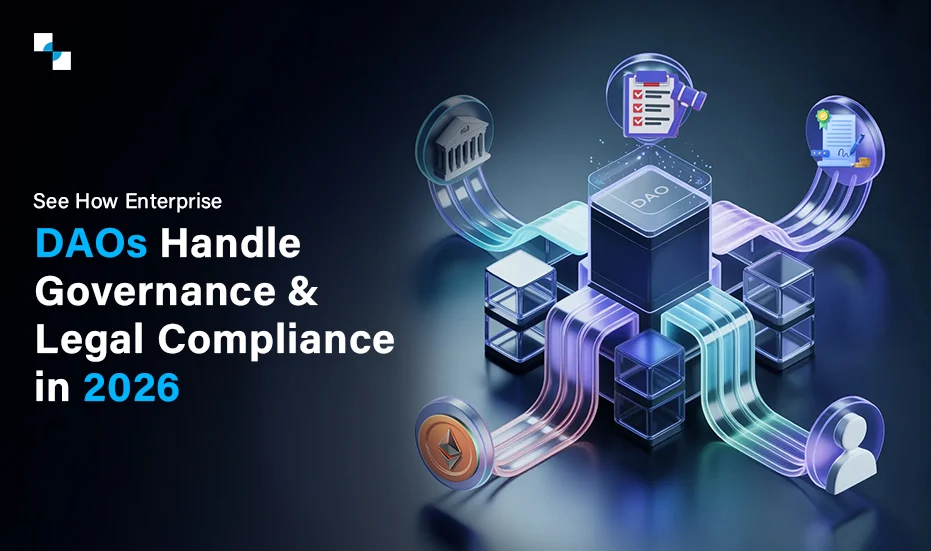
Register a legal entity, such as a Wyoming DAO LLC or a Swiss Association, to provide a clear liability shield. This wrapper allows the DAO to enter contracts, hold assets, and face legal consequences, distinguishing it from an unincorporated association that may lack legal recognition.

Implement identity verification tools that allow institutions to confirm users are not from sanctioned jurisdictions. These systems must verify compliance status without revealing sensitive personal data, balancing transparency with privacy requirements mandated by financial regulators.

Ensure all governance votes are recorded immutably on-chain. This provides an auditable trail for regulators, demonstrating that decisions are made by verified participants rather than hidden actors, thereby satisfying accountability standards for RWA tokenization.
Automate regular compliance reports that detail treasury movements, token distribution, and governance activity. These reports should be accessible to regulators and investors, ensuring continuous adherence to SEC rules and preventing the accumulation of unreported liabilities.
No comments yet. Be the first to share your thoughts!