
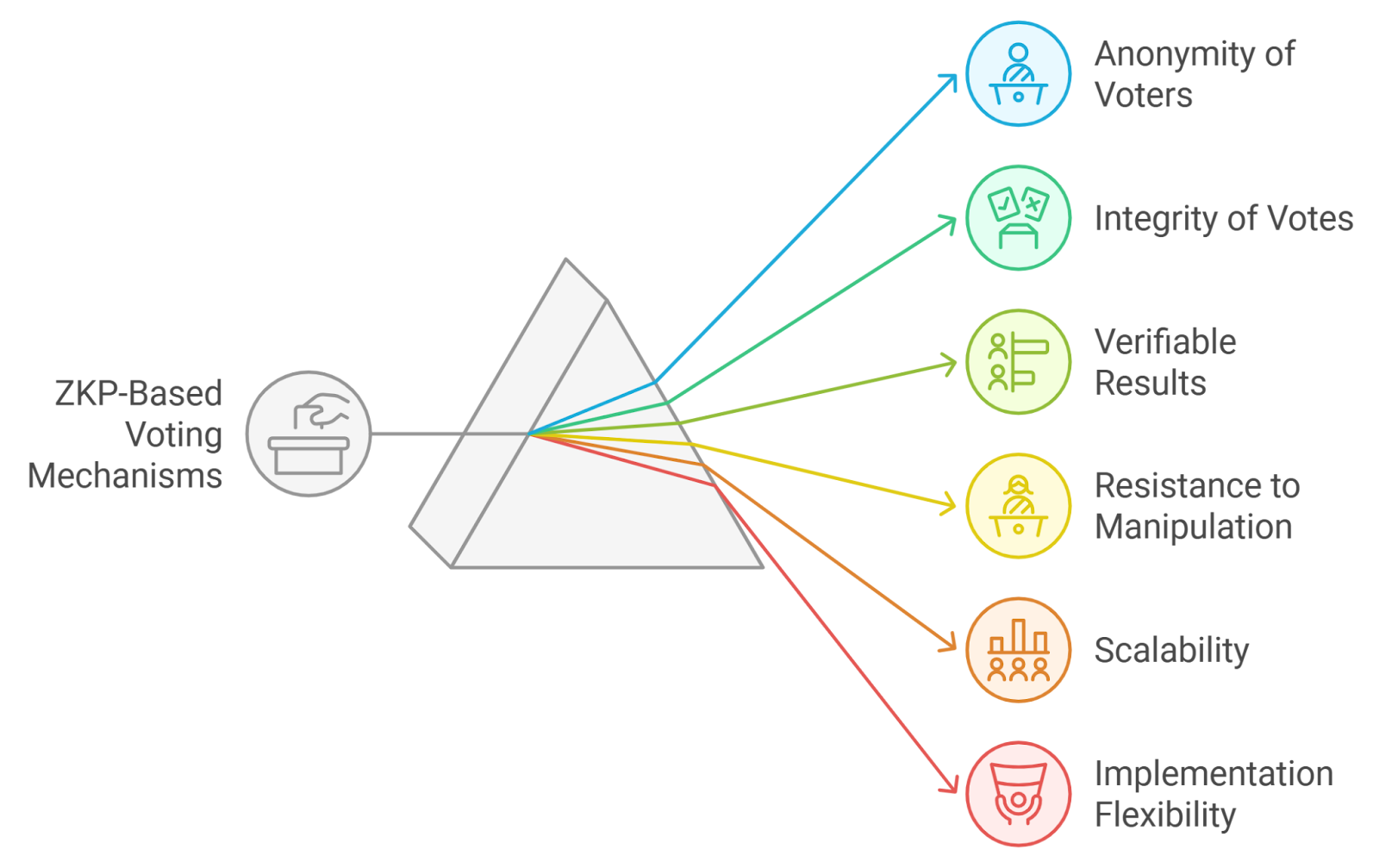
Zero-knowledge proofs (ZKPs) are rapidly redefining the landscape of confidential DAO voting. By enabling members to prove their eligibility and cast votes without revealing identities or choices, ZKPs align privacy with verifiability, unlocking a new paradigm for private governance on blockchain. As DAOs mature, demand for secure, censorship-resistant voting protocols has intensified. The integration of advanced cryptographic primitives, such as homomorphic encryption and ZKPs, is now essential to mitigate vote buying, coercion, and groupthink while fostering democratic participation.
Why Zero-Knowledge Proofs Matter for DAO Privacy
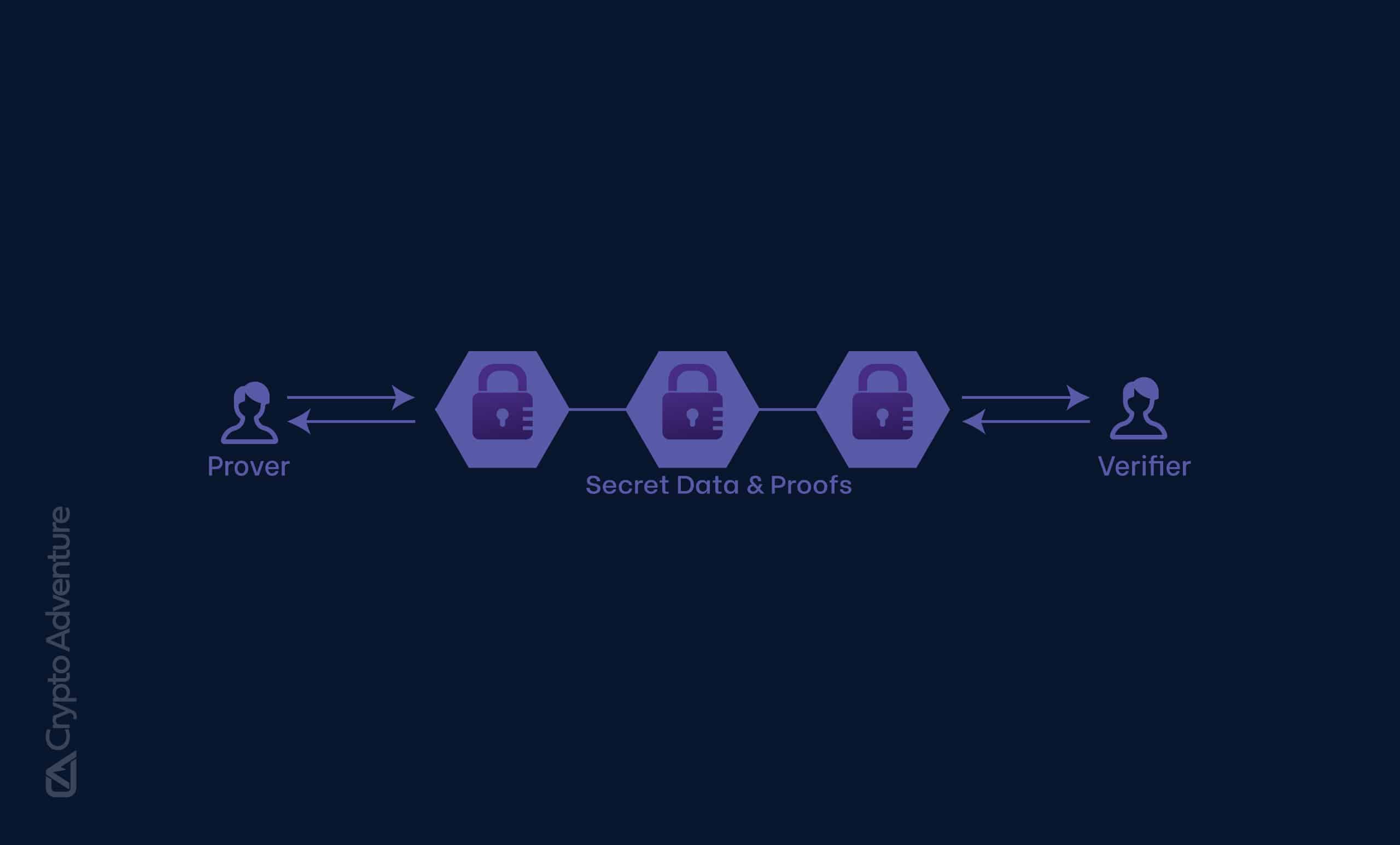
DAO voting mechanisms have long struggled with balancing transparency and privacy. Traditional on-chain votes expose voter addresses and preferences, making them vulnerable to external pressures and retroactive scrutiny. In contrast, zero-knowledge proofs DAO systems allow participants to prove they are eligible voters and that their votes are valid, without ever revealing the underlying data.
This paradigm shift is not just theoretical. Projects like Semaphore demonstrate that it’s possible to prove group membership without disclosing which member is acting at any given time (zk.ens.gregskril.com). This capability is foundational for confidential DAO voting, where both eligibility and vote content must remain private while maintaining public verifiability of results.
Core Components of Private Governance Blockchain Protocols
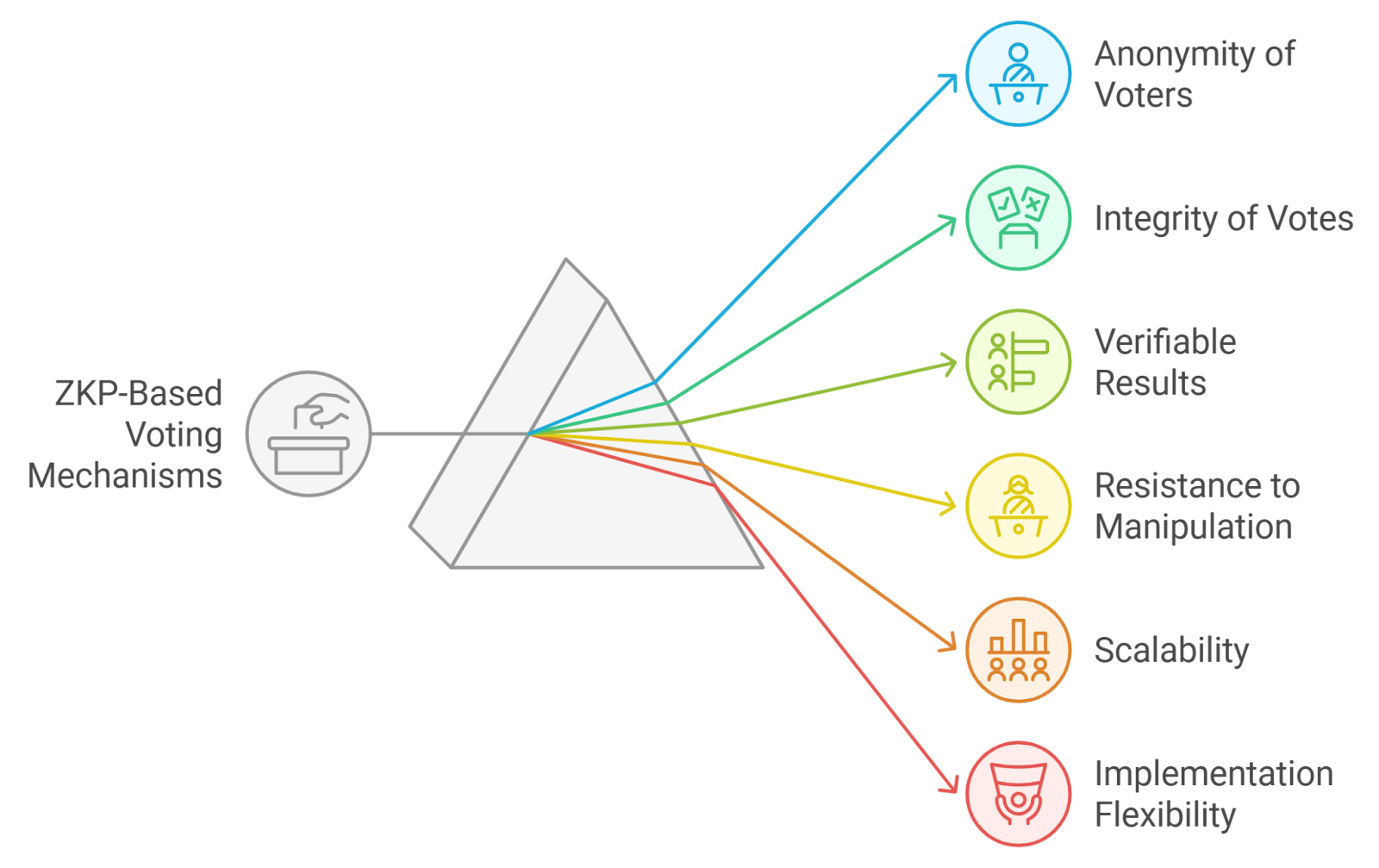
The architecture of secure DAO voting protocols built on ZKPs typically includes:
Key Components for ZKP-Based Confidential DAO Voting
- Voter Eligibility Verification: Use zero-knowledge proofs to confirm a member’s right to vote without revealing their identity, ensuring only authorized participants can vote.
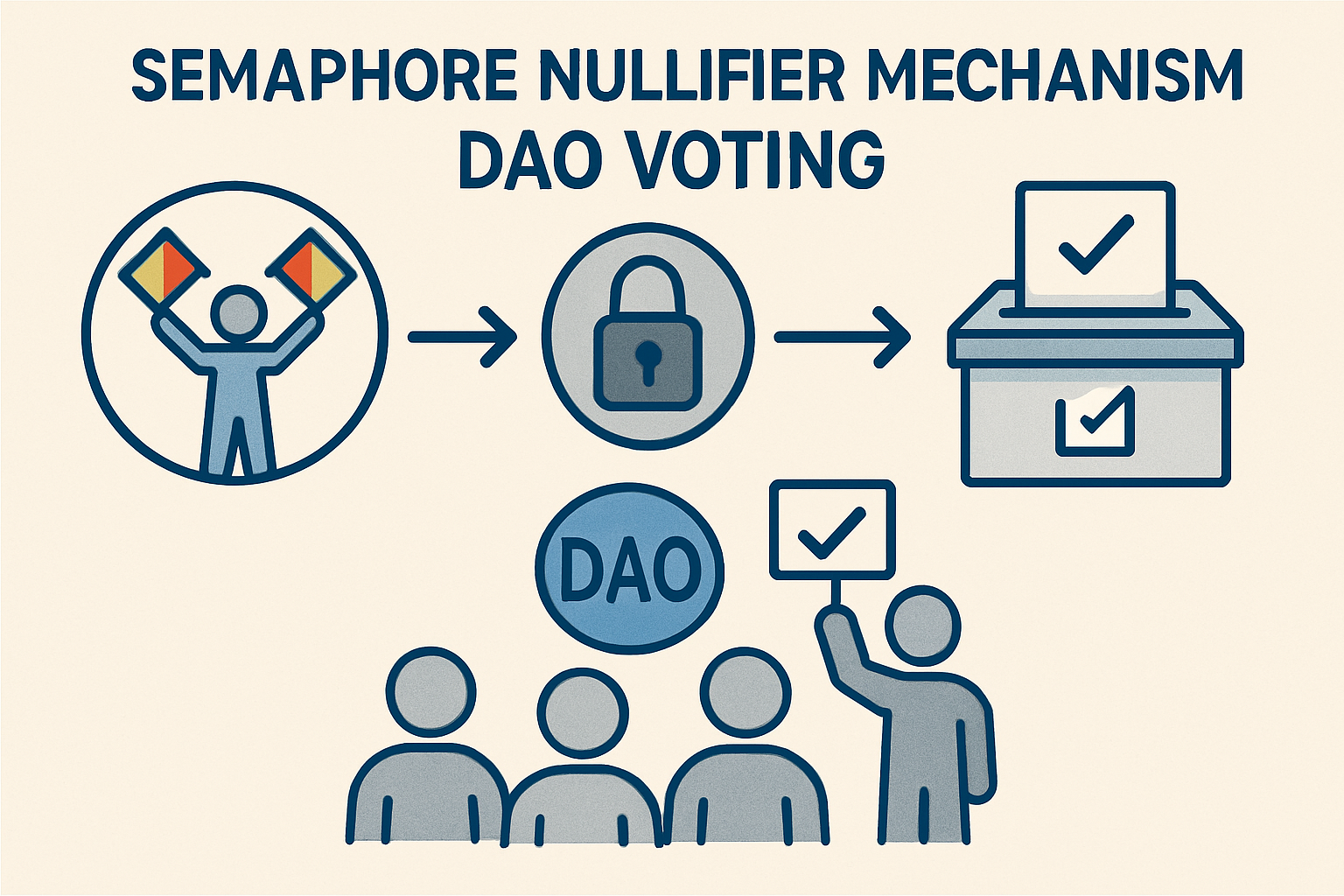
- Anonymous Vote Casting: Implement cryptographic protocols like Semaphore to enable members to submit votes anonymously while proving group membership.
- Double Voting Prevention: Generate unique nullifiers for each vote to guarantee one vote per member per proposal, without linking votes to identities.
- Transparent Yet Private Tallying: Apply homomorphic encryption to aggregate and verify vote counts publicly while keeping individual votes confidential. See Shutter Network for real-world examples.
- Smart Contract Integration: Develop and deploy smart contracts that manage proposals, vote submissions, and ZKP verification to automate and secure the voting process.
- User-Friendly Front-End Interface: Build interfaces that handle proof generation and submission, making confidential voting accessible and seamless for DAO members.
- Comprehensive Testing and Deployment: Rigorously test the system for vulnerabilities before deploying on established blockchain networks, ensuring robust security and privacy.

- Voter Eligibility Verification: Using ZKPs to confirm a member’s right to vote without identity leaks.
- Anonymous Vote Casting: Cryptographic techniques let users submit votes anonymously while ensuring only one vote per member per proposal.
- Double Voting Prevention: Unique nullifiers are generated so each vote can be checked for duplication without linking back to the voter.
- Transparent Yet Private Tallying: Homomorphic encryption allows aggregation of encrypted votes, final tallies are public but individual choices stay confidential (blog.shutter.network).
This combination ensures that DAOs can operate with integrity even in adversarial environments, shielding sensitive governance data while supporting auditability, a true leap forward in DAO privacy solutions.
The Implementation Stack: From Circuits to Smart Contracts
The real challenge lies in translating cryptographic theory into robust, user-friendly systems. Modern implementations begin by setting up a development environment with tools like Circom (for circuit design) and SnarkJS (for proof generation). The next step is designing custom circuits that encode both membership proofs and valid vote formats, critical for enforcing eligibility without leaking sensitive information (markaicode.com).
Smart contracts act as the backbone, managing proposal creation, vote submission, and tallying logic. Integrating ZKP verification within these contracts ensures only valid votes count toward outcomes, and that no individual’s participation can be traced back through on-chain activity logs.
For DAOs, seamless UX is mission-critical. The front-end must abstract away cryptographic complexity, letting users generate proofs and submit votes with minimal friction. This is where many open-source projects are making strides, offering templates and SDKs that simplify integration of zero-knowledge proof workflows. Testing and security audits are non-negotiable steps before full deployment, as even minor implementation flaws can compromise privacy or allow double voting.
Emerging Implementations and Real-World Applications
Several pioneering protocols have moved from theory to production:
- AGYSO ZK-DAO-VOTE: Combines homomorphic encryption and ZKPs for robust privacy-preserving voting (devfolio.co). This system demonstrates how encrypted aggregation and anonymous proof verification can coexist in a DAO context.
- Private Voting DAO on Aleo: Implements private proposal creation, confidential treasury actions, and fully shielded voting using ZKPs (github.com). By leveraging Aleo’s native support for zero-knowledge circuits, it achieves strong privacy guarantees without sacrificing usability.
- ZKP-Voting: A platform enabling anonymous yet verifiable voting processes for any decentralized community (github.com). Its modular design allows DAOs to adopt private governance blockchain practices with minimal overhead.
Each of these solutions illustrates the flexibility of ZKP-based architectures. Whether deployed on Ethereum Layer 2s or bespoke zero-knowledge chains, they prove that secure DAO voting protocols are not only feasible but increasingly practical at scale.
Challenges and Future Directions in Secure DAO Voting Protocols
The adoption curve is steep but accelerating. Key technical challenges include optimizing proof generation times (to minimize latency), reducing gas costs for on-chain verification, and ensuring compatibility across multi-chain environments. User education also remains a hurdle - members must trust that their votes remain confidential even when results are publically auditable.
The future of private governance blockchain systems hinges on continued research into more efficient cryptographic primitives and better developer tooling. As more DAOs recognize the strategic value of confidentiality - not just for individual voters but for the integrity of the entire organization - demand for these solutions will only grow.
Best Practices for DAO Privacy Solutions
If you’re considering deploying zero-knowledge proofs in your own DAO governance stack, keep these best practices top-of-mind:
Best Practices for Secure ZKP-Based DAO Voting
- Leverage Proven ZKP Protocols: Use established zero-knowledge proof frameworks like Semaphore for anonymous membership proofs, ensuring robust privacy and security guarantees.

- Implement Homomorphic Encryption for Tallying: Adopt homomorphic encryption to enable confidential vote aggregation, as demonstrated by Shutter Network, ensuring public verifiability without revealing individual votes.

- Prevent Double Voting with Nullifiers: Integrate unique nullifier mechanisms (as in Semaphore) to guarantee each member votes only once per proposal, eliminating double voting while preserving anonymity.
- Utilize Open-Source ZKP Voting Implementations: Reference and build upon real-world projects like ZKP-Voting and Private Voting DAO on Aleo to accelerate development and ensure best practices.

- Design User-Centric Interfaces: Develop intuitive front-end interfaces that handle proof generation and submission seamlessly, minimizing user friction and maximizing participation.
- Conduct Comprehensive Security Audits: Rigorously test smart contracts and ZKP circuits for vulnerabilities, leveraging established auditing firms or open-source audit tools before mainnet deployment.
- Document and Open-Source Voting Circuits: Publish ZKP circuit designs and implementation details to foster transparency, peer review, and community trust.

- Rigorously audit all smart contracts and circuits before mainnet deployment.
- Leverage existing libraries (like Circom or Semaphore) to avoid reinventing cryptographic wheels.
- Pilot new systems with small groups before scaling to full membership.
- Maintain transparency about protocol changes while keeping vote content strictly confidential.
The landscape is evolving quickly. As more tooling emerges and standards solidify, confidential DAO voting will become a baseline expectation rather than an advanced feature. Zero-knowledge proofs aren’t just a technical upgrade - they’re foundational to building trustless organizations where every member’s voice can be heard securely and privately.




No comments yet. Be the first to share your thoughts!