
Decentralized Autonomous Organizations (DAOs) have transformed governance by distributing power and responsibility among stakeholders. Yet, the very transparency that defines blockchain-based DAOs has become a double-edged sword. As privacy concerns intensify and regulations evolve, DAOs are under pressure to safeguard sensitive data while maintaining verifiability and compliance. Fully Homomorphic Encryption (FHE) is rapidly emerging as a strategic answer to these challenges, offering a new paradigm for confidential, compliant, and trustless DAO operations.
Why Privacy Matters in DAO Governance
Transparency is core to blockchains, but for DAOs, radical openness can expose members to coercion, vote-buying, or reputational risk. Public voting records, proposal histories, and treasury activity can be weaponized by adversaries or competitors. Private DAO governance is not just a matter of individual preference; it is foundational to honest participation and robust decision-making. As highlighted by pse. dev, confidential voting mechanisms encourage candid input, reduce manipulation, and unlock the full potential of decentralized governance.
Consider a high-stakes protocol upgrade or a treasury allocation: if every vote is visible on-chain, influential actors may pressure smaller holders or collude to sway the outcome. Privacy-preserving voting mechanisms disrupt these dynamics, fostering more authentic engagement and leveling the playing field for all participants.
How Fully Homomorphic Encryption Works for DAOs
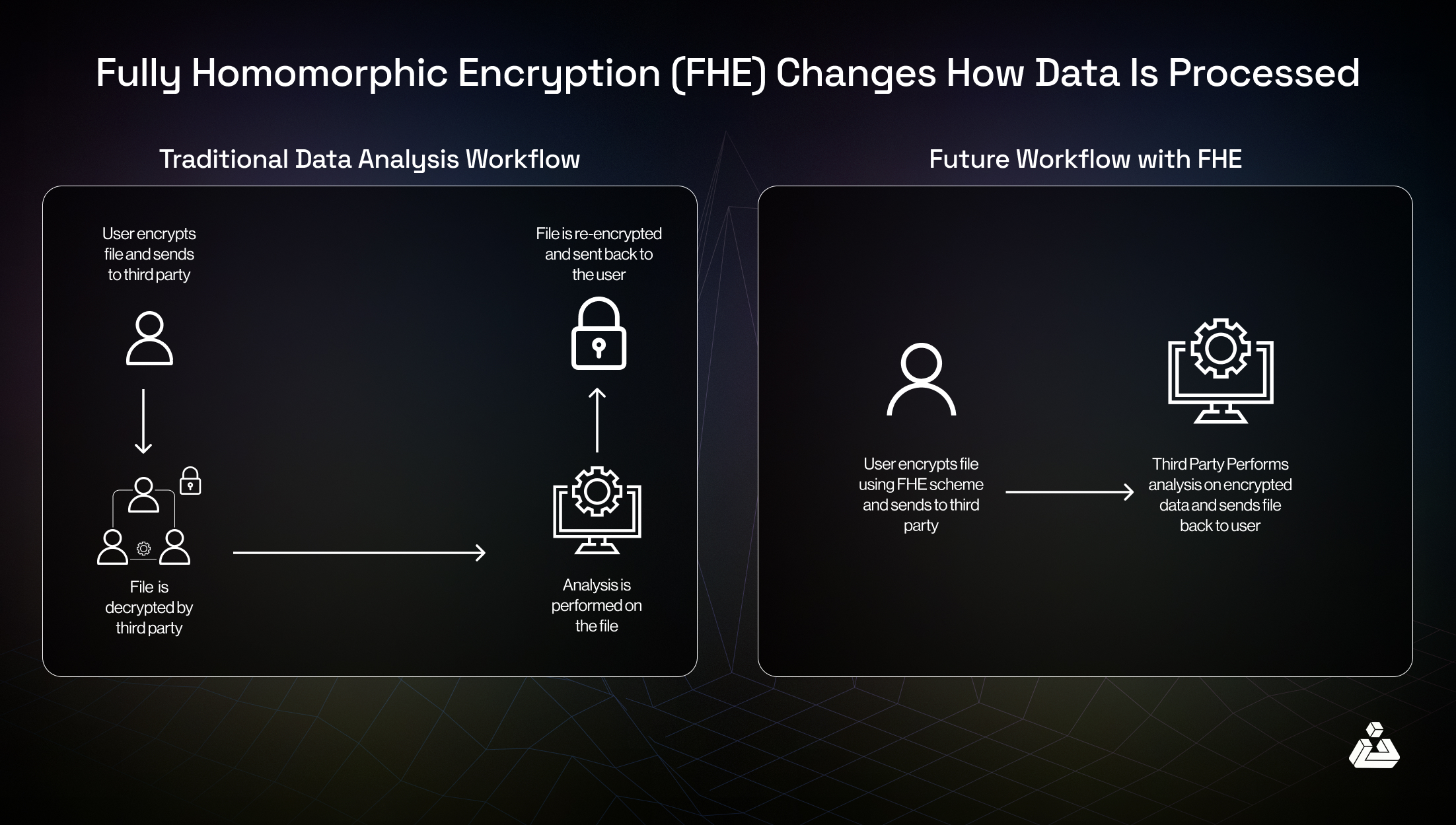
FHE is not just another privacy tool; it is a leap forward in cryptography. Unlike traditional encryption, which requires data to be decrypted before processing, FHE allows computations to be performed directly on encrypted data. For DAOs, this means that members can submit encrypted votes or proposals, which are then processed by smart contracts without ever exposing the underlying data.
The implications are profound:
- End-to-end confidentiality: Individual votes, proposal details, or sensitive financial data remain hidden throughout the process.
- Verifiable outcomes: The final result (such as a vote tally) can be decrypted and verified without compromising the privacy of individual inputs.
- Composable privacy: FHE can be integrated with other cryptographic primitives, such as zero-knowledge proofs or multi-party computation, to create layered privacy architectures for complex governance scenarios.
Projects like Zama and Shutter are pioneering permanent shielded voting systems using homomorphic encryption, moving beyond basic privacy to achieve privacy-first decentralized governance that is both scalable and resilient.
FHE as a Compliance Catalyst for Global DAOs
Regulatory scrutiny is intensifying as DAOs handle larger treasuries and operate across multiple jurisdictions. Laws like GDPR in Europe or HIPAA in the US require robust data protection measures - a tall order for transparent blockchains. FHE enables DAOs to process personal or financial data in encrypted form, aligning with privacy mandates without sacrificing utility or transparency.
For example, a DAO might need to verify member eligibility or perform sensitive treasury audits. With FHE, these computations can be run on encrypted datasets, ensuring that no individual or third party can access raw data during the process. This not only mitigates regulatory risk but also builds trust with members who expect confidentiality as a baseline feature.
To dive deeper into how FHE powers confidential DAO governance, explore our in-depth guide: How Fully Homomorphic Encryption (FHE) Powers Confidential DAO Governance.
Navigating the Challenges of FHE Integration
Despite its promise, bringing fully homomorphic encryption DAO solutions to life is not without hurdles. The most significant is computational overhead. FHE operations demand substantial processing power and memory, which can slow down smart contract execution and increase costs. For DAOs running on public blockchains, these constraints are non-trivial, especially when network congestion or gas fees spike.
Technical complexity is another consideration. Integrating FHE into existing governance frameworks requires specialized expertise in cryptography and secure system design. Projects must carefully architect their systems to avoid introducing new attack surfaces or undermining the core tenets of decentralization. As with any emerging technology, early adopters will encounter a learning curve - but the upside is a more resilient, privacy-first decentralized governance model.
Fortunately, the ecosystem is responding. Open-source libraries and developer tools from teams like Zama are lowering the barrier to entry for confidential voting blockchain applications. As standards emerge and performance improves, we can expect broader adoption of FHE-powered DAOs that balance privacy, transparency, and compliance.
The Future: Confidential, Verifiable, and Global DAO Governance
The next wave of DAOs will not be defined by their radical transparency alone but by their ability to offer verifiable privacy. Imagine a world where treasury management, proposal evaluation, and even sensitive HR decisions can be conducted entirely on-chain without exposing underlying data. Secure treasury management DAO frameworks leveraging FHE will enable organizations to audit finances and enforce spending rules while keeping transaction details confidential - a paradigm shift for both security and compliance.
As regulatory landscapes evolve, DAOs that embrace privacy-enhancing technologies will be better positioned to navigate cross-border operations and build trust with users who demand confidentiality as a right, not a privilege. The composability of FHE with zero-knowledge proofs and multi-party computation unlocks even richer architectures for confidential voting in DAOs and beyond.
Ultimately, privacy-first decentralized governance is not just an aspiration but an emerging reality. By embedding FHE into their core processes, DAOs can offer members a new standard: participate fearlessly, knowing your data is protected and your voice cannot be bought or coerced.
For organizations ready to explore this frontier, our practical guide on how FHE enables confidential DAO treasury management offers actionable steps and real-world examples.
The convergence of cryptography and decentralized governance is reshaping what it means to participate in a global organization. The future belongs to DAOs that see privacy not as a trade-off against transparency, but as the foundation for trust, compliance, and innovation.




No comments yet. Be the first to share your thoughts!